

Article originally posted by USAT certified coach Michael Ricci at:
http://d3multisport.com/race-day-planning/bike-and-run-pacing-for-triathletes/
Many athletes have a hard time with regard to intensity. We all work hard in our daily lives, and it s only natural to want to work hard at being a better athlete. Working hard at doing the right things is far different then working too hard in an aerobic sense. How hard should you train on a daily basis Of course this depend on what time of year it is, what distance you are training for, and of course what your coach has on your schedule.
When I write a workout and I give an athlete a Zone1-2 workout, I expect the athlete to find the happy medium and train at a pace they could sustain all day. What I usually get when I check over a log is ..I went out too hard, and well I bonked.. or ..I was much faster on the first hour of my ride and then I kind of faded .
Run Pacing
My solution is to do a better job of explaining exactly what I want from my athletes. To provide you with a frame of reference, my LTHR (lactate threshold heart rate) on the run is about 168-171. My Zone 1 ends at about 155 bpm (beats per minute).
When I run training in a Zone 1-2, and I am running easy which is like a guilty pace , I am around 140 bpm. That would put me close to the top of my Zone 1. When I am running Steady (which I also call my Aerobic Threshold or AeT) I am usually around 148-150 which puts me about the middle of my Zone 2. With the exception of running tempo runs, I don t run over 155 in training. Sometimes I may see 160 on a steep hill, but I quickly get my HR back down by walking. Most of my Steady running is done at 150 bpm, so for me that 150 bpm is my AeT or Steady .
Your average HR during any particular run may vary by what type of terrain you are running on but take notice of your HR when you are running Steady on the flats; this HR should be in the comfortable zone where you can stay all day.
Now, having said all that; let me back up for a minute. Running Steady to me may be much different for you. You may find your Steady zone at the high end of Zone 1. Or you have may find your Steady zone at the top end of Zone 2.
You should be able to see a marked difference between running easy and running Steady . When I am around 140-145 it s a pretty easy run. Once I jump over that magical number of 147-150 I see a change in my breathing and my effort is increased. I can still run aerobically here, don t get me wrong, but I am no longer running easy . You should feel and even hear a change in your breathing pattern. This is when you are running Steady . Once I get into this zone, I don t look at the HRM (heart rate monitor) too much, I know where I am effort-wise and the HR will usually settle between 147-152. Your objective should be to get comfortable enough with the HRM that eventually you can look at it and know exactly what your HR is. By monitoring your breathing you will know when you have crossed that line of easy to Steady .
If you can follow the above and practice the discipline of just running Steady when you are assigned those Zone 1-2 runs, you will improve your running. Spend as much time as you can running Steady and it will pay off.
Bike Pacing
Now how does this apply to biking Once again, to provide you with a frame of reference, my LTHR (lactate threshold heart rate) on the bike is about 155-160. My Zone 1 ends at about 141 bpm (beats per minute).
When I bike train in a Zone 1-2, and I am riding easy I am around 125 bpm. That would put me close to the top of my Zone 1. When I am biking Steady I am usually around 135-140 which puts me about the middle to the top of my Zone 2. With the exception of climbing hills, I don t run ride over 140 in training. Sometimes I may see 145 on a steep hill, but I quickly get my HR back down by spinning easy. Most of my Steady or AeT biking is done at 135-140 bpm.
The fun thing about cycling is that you can tie in your HR to your cadence and then to your power (in watts) if you access to that type of equipment. I enjoy being on my Compu Trainer pedaling along at 125 bpm, and seeing my watts at 200 and my cadence dialed in at 90 RPMs. Riding Steady becomes easier the more you do it. Once you can go out there and nail a ride at Steady effort for 3 hours you are ready for a little more of a challenge: Upper Steady which will be discussed in a future article.
Michael Ricci is a USAT certified coach. He can be reached for personal coaching at mike@d3multisport.com.
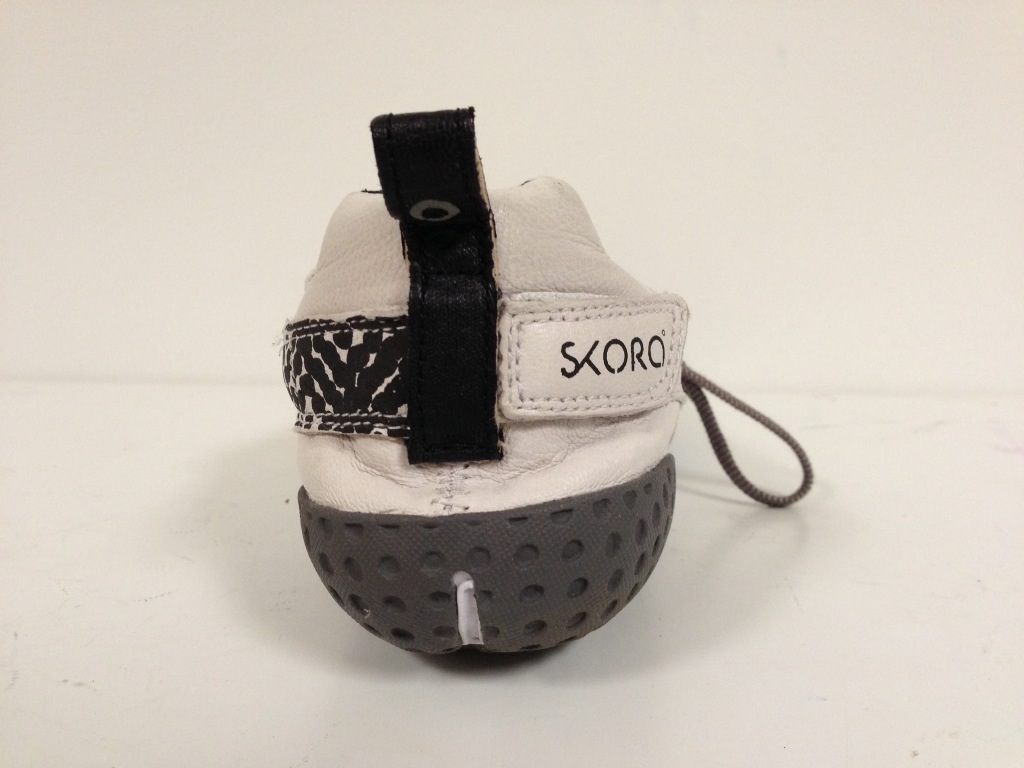
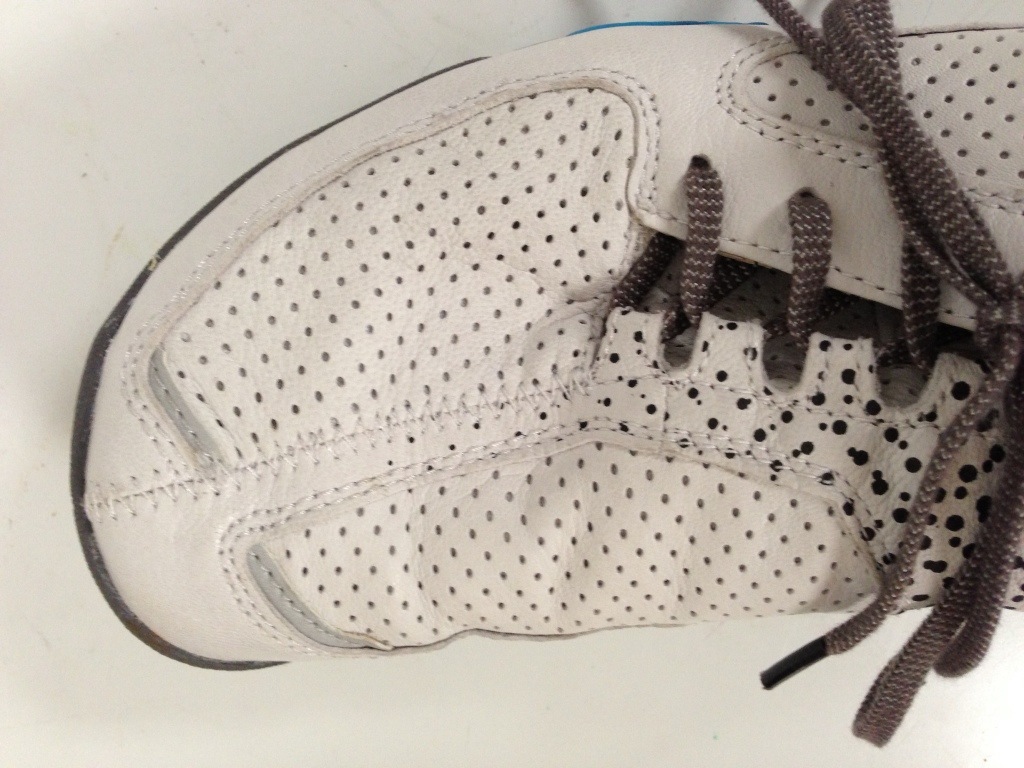
Shoe Name: Skora Form
Model: R01-002M04
Price: MSRP $184.95
Weight: 8.2 oz
Drop: 0 mm
Forefoot: An excellent wide and accommodating forefoot. Being that the majority of my miles are in FiveFingers, this shoe felt great in the forefoot area. The Base model is somewhat wider then the Form and did fit kind of loose. I think the Base is a bit sloppy but comfortable.
Cushion: Not much cushion which is what I like as it allows you to feel the ground. The Base seemed to feel a bit softer on the ground then the Form, but I liked the hardness of the form better. Definitely a minimalist shoe feel.
Flexibility: Easily rolls up into a ball with the flexible sole.
Overall: I definitely would recommend this shoe for anyone who likes a true minimalist shoe. The Form has a better fit and is made of a combo of goat and sheep skin which is different. Wasn’t a fan of the leather but it has grown on me. Is soft and forgiving and forms to foot. Not tight at all and does not rub. Price is a little high but compared to a top of the line motion control ASICS it is actually cheaper. Would advise the Form over the Base until the new Base is released.
;




Shoe Name: NEW BALANCE 5000
Model: RC5000
Weight: 3.2 oz
Price: MSRP $124.99
Drop: 5mm
Forefoot: A bit too narrow for what I like. Being used to a wide toebox similar to the minimus, this felt constricting to my toes. Can still run in though. Much better the the extremely narrow Nike FlyKnit
Cushion: Revlite foam is really noticeable in the heel and is great for longer runs when tiring cause the heel to strike little more then normal after the forefoot strike. Does tend to push up against the arch in the medial part of the shoe
Flexibility: Bends in the middle but can’t completely roll up.
Overall: Not a true minimalist shoe but recommend. Designed as a racing flat I would save this shoe for races. Though not intended for marathons, I think for runners used to minimalist shoes, this makes for a great racing shoe for a half marathon or full marathon.

The box weighs more then the shoe!!!


Very lightweight and breathable upper material. Light laces.

Soft pliable heel counter


Breathable last that is narrow in the midfoot. Can feel the “drop” press against the medial arch.
I know this has nothing to do with running, but here’s a quick tip for making sure your Christmas tree doesn’t fall over.
I’m sure many of you have the famous four bolt stands that lock the tree stump in from four separate points. Sometimes they work and most of the time they don’t.
To get a tighter fit, cut a piece of wood and wedge between the bolt and the stump on two sides opposite each other. If you don’t have wood, you could even use the bottom of piece of the stump that gets cut off before placing in the stand.


Is it normal to get blisters from running? Well, obviously blisters aren’t normal, but maybe it’s ok from picking up the pace a bit? Right? Very similar to the person who has lost half of their toenails and says, “I just ran a marathon! What do you expect for 26 miles!” (I will leave the nail injuries for another post). To answer the question, no. Blisters should not occur regardless of how far you ran.
Our body is amazing in that it has a built in protective mechanism known as pain. Pain is usually the first sign we are experiencing something wrong, or about to become wrong. When a blister occurs, it is preceded by a warming or burning effect to the skin or tissue where abnormal pressure or friction is being applied. Many times this can be subtle to a runner, but is noticeable. The pain may then decrease if the running continues as we experience an intolerance. At this point the blister begins. A disruption between the epidermis and dermis begins and fluid starts to invade this space. If the activity continues or the pressure is severe enough, bleeding can occur as the capillaries become ruptured. This is sometimes referred to as a “blood blister”. Continued activity at this point will probably create a rupture of the epidermis causing a release of the fluid and blood. This is actually a good thing. Consider that if the pressure is not released, it can continue to accrue and cause damage to the underlying tissues resulting in more severe injury.
So what should we do when we take off our shoe and encounter this? The pressure needs to be released and this is done by first puncturing the epidermal layer of the blister (outer skin). Try to puncture in a manner which allows gravity to let the fluid flow into a gauze pad held below it. This can be accomplished with a needle or manicure scissors after sterilizing by wiping with isopropyl alcohol. The key is to remove the outer layer of the blister to reduce the pressure and allow for the underlying skin to heal. Initially this skin may be tender and “burn” but can be treated with triple antibiotic ointment and an outer covering such as a bandaid or gauze. Warm soapy water is all that is needed to wash the blister. Soaking can be performed if there is debris in the wound, but is not needed (soaking for 15-20 minutes can help clean out the debris with less pain).
Blisters will heal with rest. Usually running can resume after 48-72 hours, or even faster depending on the severity of the pain. The key is to find out what created the pressure. In most cases it is poor form combined with ill fitting shoes. Blisters are not normal, even in marathoners!!!

The loose skin should be cut away with care taken not to pull and disrupt the healthy skin.

This blister should be drained and the covering should be removed.
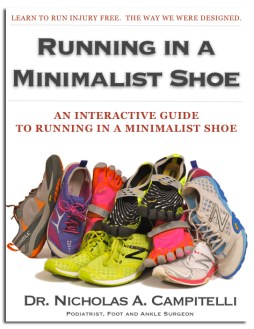
I am very excited to announce that my interactive textbook is now available on the iPad through the iBookstore. This is a great tool for anyone who wants to transition to a minimalist shoe and is not sure how to safely do so without risking injury. In Running in a Minimalist Shoe, you will find the same principals I utilize in the office to change a runners form who has been suffering from chronic injuries. We have incorporated videos and pictures to make it very simple to understand how easy it is to acquire natural form.


https://itunes.apple.com/us/book/running-in-a-minimalist-shoe/id579473455?mt=11
Dr. Mark’s Weekly Tip: Elastic Recoil Is Like Saving Money in The Bank
Originally posted at: http://naturalrunningcenter.com/2012/11/13/dr-marks-weekly-tip-elastic-recoil-saving-money-bank/
Posted on 13 November 2012
Elastic recoil leads to a more efficient transfer (and savings) of energy.
There is a lot of confusion around the term elastic recoil vs. braking in running. A critical feature of efficient running is a strong and stable base of support. Without this foundation, there can be no efficient transfer of energy.
Our tendons are highly adapted to storing and releasing energy under tensile strain. Jay Dicharry uses a slingshot analogy. As runners we must land a bit in front of our center of mass to store the energy and it then releases as we push off the ground. This isnot braking if done correctly.
Can we tell what the runner is actually doing with a video camera? Not exactly as we cannot see forces?
But we can make some likely conclusions with slow-motion film as one can see a springy motion vs. a hard hit and resulting shock wave with an overstride. Muscles lengthen and shorten in the overstride and slow cadence pattern and compromise the elastic storage, as does trying to pick up your foot too soon with active muscle contraction (this is sprinting).
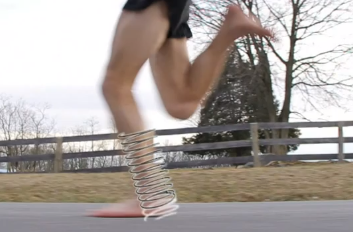
Rewatch this video on the “Principles of Natural Running”here. Do some of the drills shown in the video such as the jump rope and run with tether drill to learn how to land closer to your center. Also a must read is “Anatomy for Runners” by Jay Dicharry.
What? I love my Garmin!!! How could you say that!!!

Many runners eye’s are glued to the “pace” which dictates their running.
I’m sure most of you reading this experienced the above thought. Why would I comment negatively on a GPS watch? Sure you may understand my opinion of running shoes, but really? Garmin’s now? I’m sure you will agree after your hear my thoughts.
Shoes
Many of you who follow me and read my articles etc, understand my position on running shoes. They matter almost as much as the shirt on your back does when it comes to running. (I do have a lot of favorite shirts in my closet that I prefer to run in!!) As for shoes, they tend to interfere with form. I posted a picture earlier this week on Twitter that was of an early Nike Waffle Racer.

The vintage Nike Waffle Racer
So much has changed since this shoe was constructed. We have gone from a flat shoe with minimal cushion, to a rigid soled shoe with “marshmallows” on the heel placing the foot in a severely angled position. In fact the owner of this Nike (works at a speciality running shoe store) had explained to me over the years he has seen injuries such as Achilles tendonitis and plantar fasciitis peak and diminish according to the way running shoes were being constructed.
What many runners out there fail to realize is that a running shoe should allow you run, not enable you to run. In other words, the foot has many mobile joints that need to function to allow for shock absorption and proper function. As soon as we interfere with this process by controlling or inhibiting motion, problems start to occur. As a surgeon, I perform a procedure know as a subtalar joint arthrodesis. It is basically a fusion (adhering the joint ends permanently) of the subtalar joint to prevent motion from occurring to the joint. This is reserved for end stage arthritis where any available motion is painful. When we perform these, one of the first things that we stress to the patient is that they may end up with problems elsewhere because anytime motion is inhibited in one joint, force will be placed to other areas. This can be the other joints in the foot, or many times the knee or hip. The same process, although to a smaller degree, happens when we begin inhibiting motion with running shoes and orthotics. I have seen remarkable changes in my practice when we get runners to focus on form as opposed to footwear. It is amazing to see how well the body can function and perform when we let it work the way it was designed.
Now onto the watches.
GPS Watches
The majority of my running has been done pre GPS. How did people do this? What did we base our workouts on? Time and also distance. We then figured our pace out when we finished. Get it? When we finished. Not during our run, and definitely not before it! Speed or pace was based upon how we felt. If it was a nice day and the music on our heavy Sony Walkmans was fitting, we sped up. If it was a long day and feelings of tiredness ran through our legs, we slowed down. What happens today? Most of us stare at a GPS watch and say, “I feel like crap but I should be able to maintain a 9:00 minute mile!” We push ourselves, maintain the desired “pace” and then go home and post it to Facebook. Sound familiar? Or we gauge our desired pace on what our friends pace is. “So and so runs an 8:30 pace so I should be able to!” Then there is the infamous long run on Sunday that most try to dial into race pace for 18-20 using their Garmin’s because they need to “run this fast” on race day.” Unfortunately that’s not how it works. If it were, why not mentally focus on a 5:00 mile pace and head to the Olympics? Our body’s develop and improve aerobically in response to training at an aerobic zone. This can be determined through multiple ways, but ultimately is based on age and followed by one’s heart rate. Utilizing the Maffetone method (click here for more information ) of 180-age, a 35 year old would train aerobically at 145 beats per minute. A minimum 80 percent of this persons weekly runs should be at this heart rate regardless of pace. A runner with a “poor” aerobic base should perform all of their runs in this range. When it comes time to train for a race, incorporating tempo runs and speed workouts can be added, depending on ones goal or race distance. It is important to understand that speed will develop despite the slow pace one is running. Remember, your building an aerobic base to carry you farther at a given pace. For example, any given runner may be able to run an 8:00 mile, but how far can they carry that pace? Running 8:00 miles over and over again attempting to gradually increase the amount you can do will do nothing more then burn a runner out and out at risk for overuse injury. Building a strong aerobic base instead can help one then carry that 8:00 pace over a longer distance.
So, ditch the stability running shoes, learn good form, and leave the Garmin behind and listen to your body.
Endurance athletes like marathon runners may be more susceptible to colds and infections following a long run or endurance event.
Over the years a large body of research has shown that while moderate exercise can reduce the incidence and severity of colds, intense or prolonged exercise may lead to an increased risk of infection.
Dr. David Nieman, a noted immunologist at Appalachian State University who has worked with endurance athletes like Lance Armstrong, found that running or cross-training 30 to 90 minutes a day several times a week served to strengthen the immune system. But conversely, exercise that lasted longer than 90 minutes could actually increase an athlete’s risk of infection.
According to Dr. Neiman, running 90 minutes or longer inhibits cells that help fight infection which can result in a temporary downtown in immunity that leaves athletes more vulnerable to colds and bugs.
Of course following generally accepted health guidelines like frequent hand washing and sneezing in your sleeve and not your hand can help stay infection; but there are also a couple of added precautions that may help runners guard against post-race infections.
Consume carbohydrates immediately before, during and after a race. Carbohydrates keep stress hormones and inflammatory markers controlled thereby reducing infection risks.
Get plenty of extra rest as immunity boosting growth hormones are released during sleep.
Provide your immune system added support by taking Vitamin C and Echinacea.
Another important fact to consider is that not all runners will become sick after a long run or race. In fact, the majority of runners do not fall ill. So the next time you’re scheduled for a long run or race, take steps to reduce your risk of infection but don’t let anything stand in your way. Get out there and enjoy your run!
Originally appeared at:
http://jogplanet.com/does-endurance-running-make-you-more-susceptible-to-illness/
Just a little something to think about. (Excerpt from my upcoming book Running in a Minimalist Shoe)
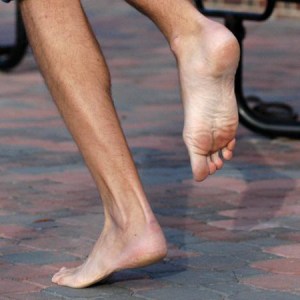
Have you ever wondered why we have toes? Consider the intricacy of our toes. There are three bones in each toe (two in the big toe) and 4 to 5 muscles attaching to the various bones. More muscles attach to the toes then any other part of the foot. Yet, what do we do to our toes? We squeeze them into the narrow toebox of a traditional running shoe rendering them basically useless. Our toes are designed to grab the ground and stabilize the foot in preparation for landing. By waking them up, strengthening them, and letting them function can greatly improve the overall function of the foot leading to improved running.







 Dr. Nick's Running Blog