
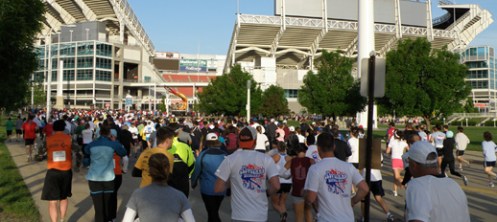
In efforts to resolve those butterflies in everyone’s stomach, here are some tips to consider for your upcoming race.
The first mile.
It’s common to hear others say, “Run your first mile SUPER slow!!!”, or if you are aiming for a 9:00 pace, run the first mile at 10:00 mile. The result of this will be just that- a super slow mile or the loss of one minute that you will have to then make up. The message that they should be relaying is do not KILL it for your first mile. By running too fast you can burn that stored glycogen too soon, but by no means is slowing down a full minute the right thing to do. Go out at your desired race pace with the aim not to run faster.
I’m going to “pick it up” the last 6 miles.
Most of those who trained for the full marathon probably did a 20 miler as their long run. With the thought of getting a PR or beating a specific time some think that they will try to run harder the last several miles. Realistically, even if you ran a minute faster each mile (which is very difficult at this stage of the race) you will only improve by six minutes. It would be more efficient from a glycogen and oxygen standpoint to run 10 seconds per mile faster the entire race and then “picking it up” as fast as you can the last 3 miles.
For those who have trained for the half, this is a different situation and does not hold true. Running faster the last six in this case would tie in with a “negative split.”
Why a negative split and what exactly is this?
A negative split means to run the last half of your race faster then the first half. There are multiple reasons why this is beneficial, but her is a simple explanation. Your body has only so much energy to run a race. When we perform at distances of 13.1 miles or greater, we need to conserve this energy and use it very wisely. Let’s use the analogy of currency. If you have $100 to spend to get you through the entire race, and you know that each half will cost you $50, then spending $75 for the first have will leave you with only $25 to finish. In other words, if you too much energy early on, you will deplete your glycogen stores and run out for the second half of the race. The challenge is to know your body’s limit and conserve for the first half, then spend more for the second half. Given your body’s fitness level, it would be physiologically impossible to run the first have faster then the second half and end with the same time. Meaning if you would burn out the second half and run slower. So either try to pace yourself evenly the whole race, or hold back just a bit for the second half.
What can I do to run faster on race day?
Nothing. Remember, you spent the last 3-6 months building your engine for race day. In fact, most endurance adaptations will take much longer then that. CaYou can “mentally” run faster, but only to a given extent of what your body can allow. Meaning your level of fitness and ability to utilize glycogen and oxygen has already been established. Enjoy the race and run to your body’s own potential regardless of what the person next to you is doing.
The Day Before.
More like the week before. While carb loading has never been scientifically proven to have a definite benefit the night before, here’s some of the reasons it has caught on. We know we need glycogen stores to run long and we can gain this from eating carbs or pasta. The problem is that over loading on this the night before a race doesn’t build the stores as adequately as one would think. There may be more benefit to gradually increasing the week before. It’s also discussed that carbs are easier to digest the night before and this is needed to not have a full stomach. Again, what ever is easier for you to eat the night before makes more sense. If you over do it with pizza and pasta, you’ll be on the throne all morning. Not fun. Eat a “normal” portion. Getting some carbs the AM before the race would have more benefit.
Fluids the Day Before.
Again, the week before. In fact, YOUR WHOLE LIFE! Our body’s function better well hydrated. We don’t “normalize” ourselves by drinking a ton of fluids in one day. To hydrate sufficiently means to consume the adequate amounts of fluids on a daily basis and activities, environment, sweating, salt intake, etc., can all change the requirements. Our electrolytes can’t be “finely tuned” overnight.
Dunkin’ Donuts the morning of race?
I won’t even answer that. Eat light, but something to get some glycogen accessible for your body: a bagel, toast, OJ and an energy gel. If you want that cup of coffee that’s okay. Your body likes routine and if it’s used to the caffeine in the morning then that’s fine. Just don’ t drink too much because you risk the “jitters” from the caffeine as well has over hydrating. I know what you’re thinking, “How can coffee with caffeine over hydrate me, it’s a diuretic?” Well, it’s been described as being a diuretic but you see it now in energy gels. The jury is still out. What tends to happen though is you will have that cup of coffee and then follow it with water to hydrate and end up drinking too much resulting in an increased need to urinate.
Mile Times Wristband.
Even though you may be wearing a Garmin, it’s helpful to remember what your time should be at each mile for your goal pace. This website offers an easy way to create a wristband that can be printed out and worn the day of the race. Very beneficial.
http://www.marathonguide.com/fitnesscalcs/PaceBandCreator.cfm
When Should I use my energy gel?
It’s hard to say exactly when everyone will need more glycogen. It will all depend on your fitness level and efficiency and pace. Many of the elite marathoners do not even use the energy supplements because they are so well trained and efficient that it is not needed. If you trained with supplements, then follow the times of when you took them on your long runs. For example if you are used to taking one at the one hour mark, then take one. On race day, they are beneficial because it never hurts to have more glycogen at hand. During training however, it’s best to try to avoid them to make yourself more efficient at tapping into your own stores. Definitely do not wait until you feel weak or tired. Then it’s too late.
Keep warm at the start.
Static stretching (bending over and touching toes and HOLDING) before a race has no real proven benefit unless you are injured. Warming up by bouncing around, hopping, or even dancing can be of more benefit. Why do you think kids skip and bounce around so much? Because it feels good and loosens up the facia (deep tissue connecting muscles) to prepare for activity. It also helps to wear an old shirt etc, to keep warm and then throw off as you begin your run. Typically these are collected and donated. Furthermore you clean out your closet!
Have Fun.
Our bodies were made to run. For some it may be a race, but at then end of the day, this should be fun!
-Dr. Nick

Many of you have seen the commercials for Dr. Scholl’s computerized scanner that evaluates your foot and tells you what insert you should be buying for your shoes. Or you may have heard others say “you have to wear good shoes with arch supports”. Is this true? In my recent blog for the periodical Podiatry Today, I discuss many of the studies which are inconclusive with respect to the real benefit of using an orthotic. In other words, placing these devices in your shoes to overcome and injury is nothing more then a shotgun approach to solving the problem. It may work or it may not. I encourage you to read my blog post which I have also pasted below. Thanks! Feel free to ask questions.
Our profession needs to keep an open mind in regard to shoes and treating running injuries. People do not change what they are doing unless they have a reason to change. I continue to see runners not responding to orthotics and stability control shoes in my practice so I have provided a change, one that is working for others and myself. Of course, there is not a preponderance of evidence to support this change but there are emerging studies that support my thinking regarding the use of minimalist shoes. I have cited these studies in the past and will continue to do so. If the prior literature on orthotics were conclusive about their effectiveness, I would not be so strong-minded in my approach. I still feel there is a lack of clarity and consensus in the literature to support the use of orthotics.
Can orthotics work? Absolutely. How and what exactly do they do? It is very difficult to prove given the variability of one’s form, training pattern, shoe gear, strike pattern, biomechanics, body weight, training intensity and change in surfaces. My stance is that orthotics can treat an injury but this is a very haphazard approach. I think they are a crutch for treating the underlying problem, which may be overuse, poor form, weak musculature or improper training patterns.
I use orthotics in my practice, albeit rarely. I have found that by spending more time educating my patients on proper training patterns, form, foot strike, surface consistency, strengthening and shoe gear, I can make more of a difference in improving their injury. It can be more time consuming and challenging, but very gratifying. I do not encourage patients to discontinue using an orthotic if it is working for them. Again, I find this is very rare in my practice as most of the patients I see have already failed this type of therapy. The same applies to traditional running shoes. Many of the runners I train with wear traditional running shoes (yes, even ASICS) and I do not persuade them otherwise if it is working for them.
I love running, podiatry and making a different in people’s lives. I am trying to change the way we think of feet in our society. We live in a society that has the stigma that we need to support and cushion our feet, which has yet to be proven. Shoes have evolved with no basis of evidence as to why a raised heel is present among many other features. I encourage others to be open-minded and consider my approach. I certainly have leaned more about orthotics and minimalist shoes as a result of being challenged by my colleagues. Thank you for stimulating my interest and encouraging me to read more.
Reviewing The Research On Orthoses
In regard to providing references to reinforce my opinions, I have done so in the past. Remember, I am speaking in regard to a paradigm change. We only have so much published on the new treatment and approach to running injuries as well as everyday foot pain and leg pain.
However, there is literature, both past and current, to support my opinions. Richter and colleagues conducted a meta-analysis of 23 randomized controlled trials on the use of orthotics for lower limb overuse conditions.1 The authors noted that the evidence does support using orthoses to prevent a first incident of lower limb overuse conditions but their meta-analysis found no difference between custom and prefab devices. The study authors noted “the evidence was insufficient to recommend foot orthoses (custom or prefabricated) for the treatment of lower limb overuse conditions.”
In looking at the efficacy of foot orthotics in the treatment of knee and hip osteoarthritis in 2008, Gelis and colleagues found “no evidence of a structural or functional impact on osteoarthritis (Grade B).”2 The authors also noted “no validated indication for prescribing foot orthotics in the treatment of knee or hip OA.”
We have even seen authors challenge Root’s philosophies. McPoil and Cornwall found that contrary to Root’s published theory, the “neutral” position of the rearfoot for the typical pattern of rearfoot motion during the walking cycle was resting standing foot posture rather than the subtalar joint neutral position.3 McPoil and Hunt further challenged Root’s theories on evaluation and treatment, and suggested an alternative “tissue stress model” for assessing and managing foot disorders.4
While Jarvis and colleagues noted the importance of static biomechanical assessment of the foot, leg and lower limb, they found that the key examinations physicians use to assess dynamic foot function and determine orthotic prescription are “unreliable.”5
Further Insights On The Relevant Literature
Several studies showing beneficial effects for orthoses were subjective in the form of surveys sent to patients.6-8
Gross and coworkers looked at 15 people with plantar fasciitis and found they could walk 100 meters with less pain by wearing an orthotic.9 This was not a long-term follow-up and in fact, the longest amount of time of wearing the device before testing was only 17 days. The study authors conclude that “custom semi-rigid foot orthotics may significantly reduce pain” during walking but these results were also subjective as they were based on patients rating their pain with the visual analogue scale and completing a questionnaire.
In a retrospective review, Saxena and Haddad looked at 102 patients with patellofemoral pain syndrome who wore orthotics and used multiple other modalities.10 They found 76.5 percent of the patients improved at the follow-up visit. Although the authors noted the use of semi-flexible orthoses was significant, we can make no direct correlation to the orthotic device given that the treating physicians used multiple modalities for these patients.”
Kilmartin and Wallace reviewed the literature to assess biomechanical foot orthoses in the treatment of lower limb sports injuries.11 In the article abstract, they note that “a review of the literature indicates that biomechanical orthoses will reduce rearfoot movement, but the effect on knee function is negligible and the clinical significance of excessive rearfoot movement is yet to be proven.”
Shih and colleagues looked at 24 runners with a pronated foot and knee pain who experienced pain relief with a medial wedge orthotic while running on a treadmill for 60 minutes.12 The follow-up was at two weeks so it difficult to draw any long-term conclusions from this study.
In a cohort-controlled trial, Ferrari examined the efficacy of orthotics in the treatment of trochanteric bursitis.13 He noted a 90 percent improvement in patients who received orthotics and a corticosteroid injection to the trochanteric bursa with fluoroscopic guidance in comparison to a 40 percent improvement in patients who had the injection only over a four-month period. Essentially, this study suggested that the placement of a rigid device in a shoe may facilitate pain relief for those with hip pain. How?
In a 2011 randomized, controlled trial involving 400 military trainees, Franklyn-Miller and colleagues demonstrated a 10-time reduction in medial tibial stress syndrome and a 7-time reduction in chronic exertional compartment syndrome with the use of orthoses.14 Overall, the authors noted an absolute risk reduction of 0.49 with the use of orthoses. However, it was not clear from the study how the orthoses were preventing injury and what the devices were doing from a clinical standpoint.
In contrast to this study was another study published in 2011 by Mattila and colleagues, who looked at the role of orthotic insoles in preventing lower limb overuse injuries.15 In this randomized, controlled trial involving 228 patients, they found that the “use of orthotic insoles was not associated with a decrease in lower limb overuse injuries.”
In another randomized, controlled trial involving 179 patients, Collins and coworkers examined the use of orthoses and physiotherapy for people with patellofemoral pain syndrome.16 While patients perceived foot orthoses as being superior to flat inserts, the researchers found no significant difference in combining orthoses with physiotherapy. In other words, adding orthotics to the physical therapy already prescribed produced no further improvements. This study demonstrated that active therapy can improve patellofemoral pain without relying on a permanent orthotic device.
In 2011, Mills and coworkers examined the short-term efficacy of orthoses in patients with anterior knee pain.17 This was a extremely short-term study of six weeks involving 40 patients with patients subjectively classifying an improvement in symptoms with prefabricated orthotics in comparison to no treatment at all.
What The Literature Reveals About Stress Fracture Risk
Assessing both semi-rigid and soft orthoses in the prevention of stress fractures in military recruits who wore “infantry boots with soles designed like those of basketball shoes,” Finestone and colleagues found that 10.7 percent of patients with soft orthotics developed stress fractures, 15.7 percent of patients with semi-rigid orthoses developed stress fractures and 27 percent of the control group developed stress fractures.18 It is interesting to see the high rates of stress fractures in all three groups in this study in comparison to the reported average incidence of stress fractures occurring in runners. Tenforde and colleagues reported a stress fracture incidence ranging between 4 to 5 percent in adolescent runners.19 Tuan and coworkers noted a stress fracture incidence rate between 4.4 to 15.6 percent in athletes.20
Researchers have also demonstrated a 3 to 6 percent reduction in stress fracture risk by shortening your stride.21 Shortening one’s stride is associated with minimalist shoes, which were proven to reduce strike impact in a recently published study.22
In Conclusion
The studies I discussed above are not selective representation of articles to support my opinions. My opinions are based on some of the articles and research provided by Kevin Kirby, DPM, in response to my last blog (see http://www.podiatrytoday.com/blogged/can-minimalist-shoes-be-beneficial-… ) as well as the research and literature I have read and continue to read.
In summary, my opinions on the use of orthotics for treating runners are based on the lack of definitive evidence as to their exact role. This leads me to be open-minded in my approach to treating running injuries. There is an enormous amount of variance in factors that can contribute to running injuries and the aforementioned studies seem to raise more questions than they answer on orthotic intervention.
For example, to rely on symptoms of greater trochanteric bursitis improving after wearing a shoe orthotic does not render any evidence as to why. Of course, we can see gait changes by using an orthotic but we can also see gait changes in runners by implementing a more natural style of running which involves landing at or near below the center of gravity of the body on the midfoot. Striking in this manner all but negates the need for any orthotic because there is minimal concern on controlling rearfoot motion. I have yet to see any study comparing orthotics to using a midfoot or forefoot strike pattern along with improved running form for treating injuries.
We need to collectively move forward with progressive thinking and challenge new and old theories. My opinions are based on current and past literature, and are not biased in regards to any shoe company, specifically Vibram USA.
In regard to my alleged ulterior motive to market FiveFingers shoes (Vibram USA), they are and continue to be a training tool for me in running. Having the opportunity to sample running shoes, I tend to train and run in a lot of different types of shoes. I recently ran a marathon in a pair of New Balance RC5000s. However, to be clear, I have no financial interest in any of the shoe companies.
It is very disheartening to see my colleagues belittle my attempts at progressive treatment options that are in current use to treat runners. We can see that as a result of the popularity of minimalist shoes as well as the lowering in heel height of traditional running shoes, a change has occurred in the running shoe industry. In my clinical experience, those involved in the sport of running are now beginning to focus more on form than on footwear itself. This is changing the way we all run and will soon change podiatry for the positive.
Original article appears here.
References
1. Richter RR, Austin TM, Reinking MF. Foot orthoses in lower limb overuse conditions: a systematic review and meta-analysis–critical appraisal and commentary. J Athl Train. 2011;46(1):103-6.
2. Gélis A, Coudeyre E, Hudry C, Pelissier J, Revel M, Rannou F. Is there an evidence-based efficacy for the use of foot orthotics in knee and hip osteoarthritis? Elaboration of French clinical practice guidelines. Joint Bone Spine. 2008;75(6):714-20.
3. McPoil T, Cornwall MW. Relationship between neutral subtalar joint position and pattern of rearfoot motion during walking. Foot Ankle Int. 1994;15(3):141-5.
4. McPoil TG, Hunt GC. Evaluation and management of foot and ankle disorders: present problems and future directions. J Orthop Sports Phys Ther. 1995;21(6):381-8.
5. Jarvis HL, Nester CJ, Jones RK, Williams A, Bowden PD. Inter-assessor reliability of practice based biomechanical assessment of the foot and ankle. J Foot Ankle Res. 2012 Jun 20;5:14.
6. Donatelli R, Hurlburt C, Conaway D, St. Pierre R. Biomechanical foot orthotics: A retrospective study. J Ortho Sp Phys Ther, 1988; 10(6):205-212.
7. Moraros J, Hodge W. Orthotic survey: Preliminary results. J Am Podiatr Med Assoc. 1993; 83(3):139-148.
8. Walter JH, Ng G, Stoitz JJ. A patient satisfaction survey on prescription custom-molded foot orthoses. JAPMA. 2004;94:363-367.
9. Gross MT, Byers JM, Krafft JL, et al. The impact of custom semi-rigid foot orthotics on pain and disability for individuals with plantar fasciitis. J Ortho Sports Phys Ther. 2002; 32(4):149-157.
10. Saxena A, Haddad J. The effect of foot orthoses on patellofemoral pain syndrome. J Am Podiatr Med Assoc. 2003; 9(4):264-271.
11. Kilmartin TE, Wallace WA. The scientific basis for the use of biomechanical foot orthoses in the treatment of lower limb sports injuries-a review of the literature. Br J Sports Med. 1994; 28(3):180-184.
12. Shih YF, Wen YK, Chen WY. Application of wedged foot orthosis effectively reduces pain in runners with pronated foot: A randomized clinical study. Clin Rehab. 2011; 25(10):913-923, 2011.
13. Ferrari R. A cohort-controlled trial of customized foot orthotics in trochanteric bursitis. J Prosth Orthotics, 2012;24(3):107-110.
14. Franklyn-Miller A, Wilson C, Bilzon J, McCrory P. Foot orthoses in the prevention of injury in initial military training. A randomized controlled trial. Am J Sports Med. 2011; 39:30-37.
15. Mattila VM, Sillanpää PJ, Salo T, Laine HJ, Mäenpää H, Pihlajamäki H. Can orthotic insoles prevent lower limb overuse injuries? A randomized-controlled trial of 228 subjects. Scand J Med Sci Sports. 2011 Dec;21(6):804-8.
16. Collins N, Crossley K et al. Foot orthoses and physiotherapy in the treatment of patellofemoral pain syndrome: randomised clinical trial. Br J Sports Med. 2009; 43:169-171.
17. Mills K et al. A randomised control trial of short term efficacy of in-shoe foot orthoses compared with a wait and see policy for anterior knee pain and the role of foot mobility. Br J Sports Med. 2011;46:247-252.
18. Finestone A, Giladi M, Elad H, et al. Prevention of stress fractures using custom biomechanical shoe orthoses. Clin Orth Rel Research. 1999;360:182-190.
19. Tenforde AS, Sayres LC, Liz McCurdy M, Sainani KL, Fredericson M. Identifying sex-specific risk factors for stress fractures in adolescent runners. Med Sci Sports Exerc. 2013 Apr 11 (Epub ahead of print)
20. Tuan K, Wu S, Sennett B. Stress fractures in athletes: risk factors, diagnosis, and management. Orthopedics. 2004;27(6):583-91, quiz 592-3.
21. Edwards WB, Taylor D, Rudolphi TJ, Gillette JC, Derrick TR. Effects of stride length and running mileage on a probalistic stress fracture model. Med Sci Sports Exerc. 2009;41(12):2177-84.
22. Giandolini M, Horvais N, Farges Y, Samozino P, Morin JB. Impact reduction through long-term intervention in recreational runners: midfoot strike pattern versus low-drop/low-heel height footwear. Eur J Appl Physiol. 2013 Apr 14. (Epub ahead of print)

A negative split means to run the last half of your race faster then the first half. There are multiple reasons why this is beneficial, but her is a simple explanation. Your body has only so much energy to run a race. When we perform at distances of 13.1 miles or greater, we need to conserve this energy and use it very wisely. Let’s use the analogy of currency. If you have $100 to spend to get you through the entire race, and you know that each half will cost you $50, then spending $75 for the first have will leave you with only $25 to finish. In other words, if you too much energy early on, you will deplete your glycogen stores and run out for the second half of the race. The challenge is to know your body’s limit and conserve for the first half, then spend more for the second half. Given your body’s fitness level, it would be physiologically impossible to run the first have faster then the second half and end with the same time. Meaning if you would burn out the second half and run slower. So either try to pace yourself evenly the whole race, or hold back just a bit for the second half.
When Ronaldo da Costa broke the marathon world record at Berlin in September 1998, he ran negative splits, which means he finished the second half of the race faster than the first half–a full 3 minutes faster, in fact.
Anyone can and should run negative splits however most runners don’t. Instead, they start out fast, hang on through the middle and resort to shuffling the last several miles. Those running a negative split will run a bit slower for the first third of a run, pick up the pace in the middle and finish with strength and speed.
While even 5-K racers can benefit from this negative-split technique, marathoners will find it even more beneficial.
Many people are so used to charging out and then gradually slowing down that they don’t trust their bodies will ever speed up during a run. By conserving resources during the early part of a run, they’ll be available to you at the end.
To build confidence in the method, practice negative splits during your training runs. Instead of starting your fartlek or interval sessions at the pace you want to average, run the first portion of the workout 10 to 15 seconds per mile slower. By the end of the session, you’ll be running faster than planned and will probably be feeling better than you’ve ever felt during a speed session.
Begin your race 10 to 20 seconds per mile slower than the race pace you’ve predicted. Don’t be tempted to speed up when you notice all those other runners flying by. Instead, hold back by imagining yourself comfortably passing them later in the race.
As you near the middle of the race–8 to 10 miles into a marathon, for example–you want to hit your race pace. Then, toward the end, use those fresh legs to pass as many tired runners as you can.

Most people can’t wait for spring to come so they can break out the flip-flops only to be told be a physician or concerned friend that they are “bad for your feet!”. Are they? Not really. In fact, most people can function just fine in flip flops if they gradually make a transition to them from the winter months. In other words, don’t put them on and wear all day or weekend. Our bodies are miraculous at adapting to change, as long as it’s gradual. Most problems with flip flops come when the individual overdoes it without letting their feet and bodies adjust. Wear them for an hour or two a day and gradually increase each week four about 6 weeks. This should reduce any chance of injury or overuse problems to the feet. Currently the shoe industry is even seen changing its recommendation guidelines as well as the shoes themselves because it is becoming evident that less is actually better. Runners are even wearing “less” of a shoe with minimal support or cushion. So rest assured, as the weather improves, a gradual change to your stylish flip flops may not be such a bad idea!

Is this a familiar phrase to you? This is one if the most dreadful comments I hear from my patients who have abandoned running due to recurrent injuries. Just this week I had a patient who was in for pain in her right foot due to what she thought may be a stress fracture. She had increased some activity recently with the nice weather and her pain felt very similar to the pain she experienced when she had a stress fracture from running several years ago. She went on to explain that she had recurrent pain from running in her feet and knees from running and was told by a physician that she needed to find another activity with less impact because running was bad for her. She stopped running and has missed it ever since. Was the running bad, or was it the way she was running that was bad? She stopped an activity that she loved because a physician didn’t want to take the time to further investigate the root of her pain and simply told her to stop. She admitted to never having a running form analysis and only tried changing shoe gear and wore orthotics when the problem occurred.
Another similar story came when lecturing to an OR staff on running several weeks ago. A woman had explained to me when she was 20 years old she was told to stop running because she had recurrent heel pain and shin pain and that her feet were not meant for running. She was approximately 50 when I met her. 30 years of not running. 30 years that she will never get back. She had no severe pathology or deformity that would inhibit her from running.
These are only two accounts of the over hundreds of stories I’ve heard from patients who stopped running because of the dreaded “your body was not meant for running” comment.
Is anyone’s body not meant for running? Possibly. But the above examples and probably 99% of the stories I’m referring to are from patients who were given advice from someone who doesn’t understand running. It’s very easy to tell someone not to run and their injuries will resolve. The challenge is to get their injuries to resolve and still allow them to run. This is what I strive for. And in all honesty, it’s not that complex. Getting someone to reset their running form, or begin a running program with care taken to focus on form and training patterns is typically all that is needed to break the chronic injury pattern.
What about severe arthritis?
Obviously severe cases of arthritis can inhibit someone from running. Most of the time it depends on what joint or joints the arthritis is in. Severe knee arthritis can limit runners depending on the severity of it. With that said, I have witness runners with bone on bone knee arthritis running marathons. The key to this is adapting to what you have by incorporating a natural gait. Do these runners need rigid shoes and orthotics? Usually not. By converting their stride to a quick turnover with short shuffling steps, they will undoubtedly reduce the stress to their knees more so then by relying on a rigid insert.
Arthritic pain can also hinder the joints of the foot with most cases occurring in the great toe joint. This condition is referred to as hallux limitus. In advanced cases the joint will either need cleaned out surgically, require an implant, or in severe cases need a fusion. Sometimes the problem corrects itself by auto fusing the joint. Having this condition however, does not mean that you have to stop running. Great toe arthritis is another example of how adapting a natural running stride can reduce pain to the forefoot or toe region. Consider what happens when someone runs with a gait consisting of landing on an outstretched leg with a heel strike. The following situations occur:
1. The heel strikes the ground with leg straight and extended without absorbing any shock
2. The forefoot slaps the ground and instead of absorbing shock and it is working harder to decelerate the body.
3. The body then has to move forward over the foot that was planted. In doing so, and extreme amount of force gets placed onto the ball of the foot that was planted. The great toe joint ends up carrying a force equal to the entire weight of the body and then has to “propel” the body forward.
What about the complex underlying biomechanical component that needs an orthotic?
Too often I hear patients telling me, I need to wear orthotics because –
1. they have a high arch
2. they have flat feet
3. they have shin splints
4. they have knee issues
5. they “pronate”
6. their orthopaedic told them it will help them
and on, and on, and on……
Bottom line, are there true underlying biomechanical problems that exist which would disable someone from running? Probably, but if the person walks without a limp and functions day to day without pain, then they can probably run. Most “biomechanical” deformities will not inhibit someone from running. With that said, if you have a severe diagnosed arthritic problem from an injury or inherited condition or disease that is a different story. But to say you “can’t run” because you had issues in the past and you were told you have a biomechanical problem and are not meant to run, is a fallacy. The human body (specifically the foot) is, as Leonardo da Vinci put it, a “masterfully engineered machine” which has the innate ability to adapt to force and stress placed upon it.
Before you decide to give up running because you were told you “can’t” and you were not meant to, reconsider. The majority of running injuries are due to overuse and can be overcome by adhering to proper training regimens and form. If you can walk, you most likely can run.
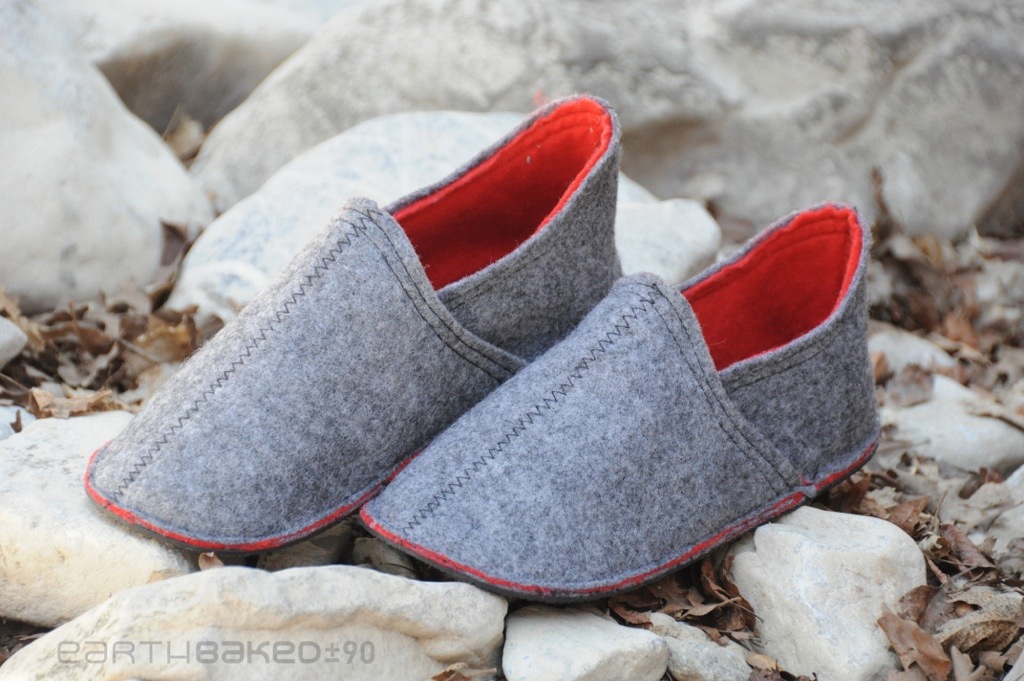
Here is a new minimalist shoe in the works known as EarthBaked. They are currently launching a campaign on Kickstarter to begin the initial product manufacturing run. Sounds like a unique idea and creative product. Check it out!
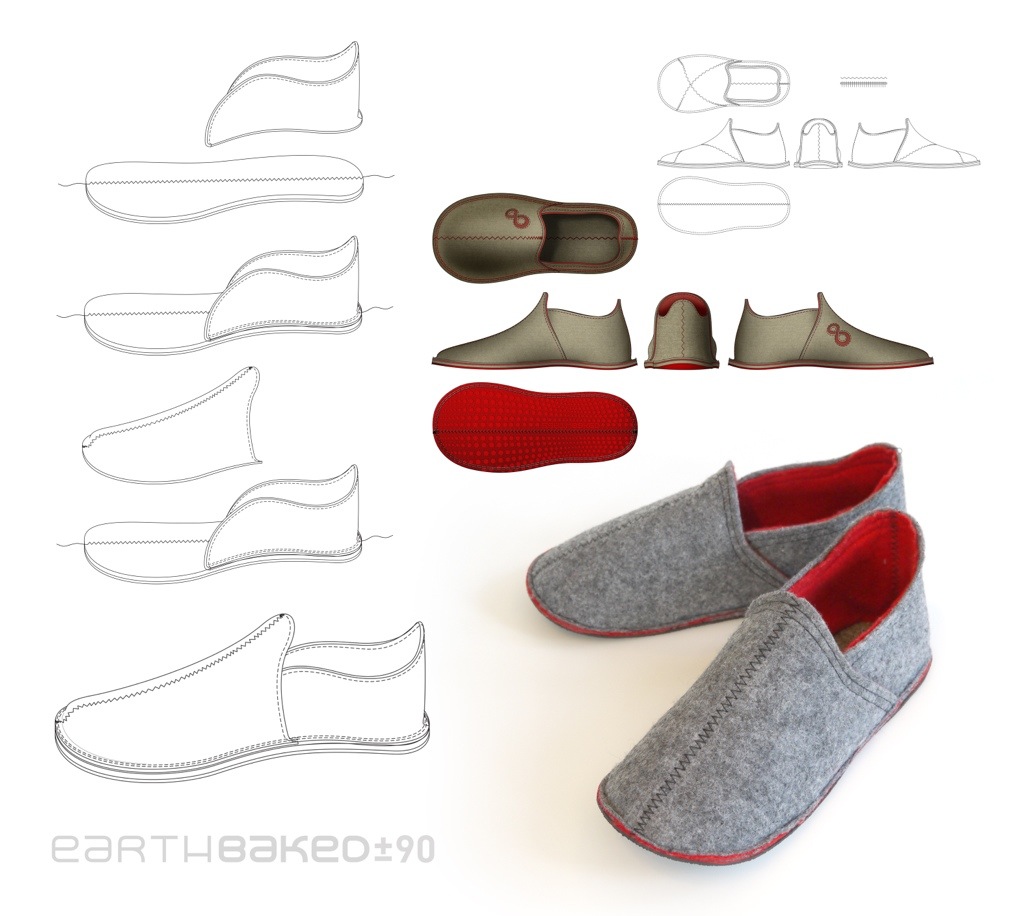
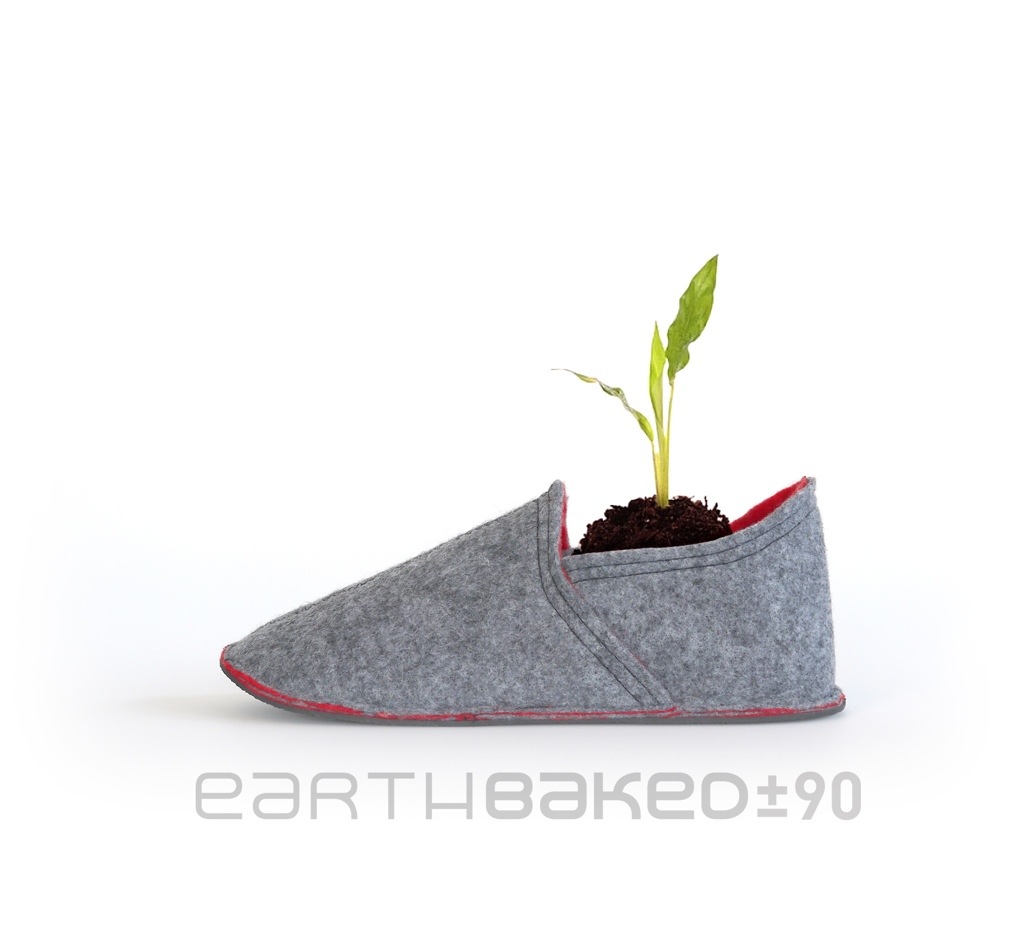
EarthBaked is a minimal biodegradable footwear concept designed to strengthen feet, the earth, and our conscience. The shoe design consists of three main components. Sole, front upper, and back upper. The upper is made with 100% wool. Wool has amazing natural properties that make it soft against skin, breathable, antimicrobial, moisture wicking, and durable. Wool is also biodegradable and works as a slow release fertilizer. With a little heat, moisture and time, the fibers break down and release valuable sulfur and nitrogen into the soil. The sole is 3mm of natural rubber with another 3mm of wool layered on top. The 6mm of separation between your foot and the ground strengthens your feet with an almost barefoot walking experience.
Another goal of the EarthBaked shoe was to simplify and economize the cost of manufacturing. It is estimated that 2 billion people worldwide are currently plagued with parasitic diseases that could be prevented by wearing shoes. EarthBaked wanted a shoe that was so simple to make that a family in Africa could start a shoe making business and become a benefit to their community. The EarthBaked shoe only requires a sewing machine, scissors, material and a pattern to be constructed.
Earth Baked is much more than a shoe. It’s a lifestyle, an option for responsible consumption, a passion for good design, and a love for natural materials on loan from their creator. If you’d like to support a biodegradable shoe that gives back, support our campaign on Kickstarter.

I figured I would kick of May’s blog posts with a bang and discuss one of the most common pathologies we treat in podiatry. Heel pain. More specifically plantar fasciitis. Each day I encounter numerous patients suffering from this in either a chronic or acute form. Why is it so prevalent in our society? I’ll give it my best to try to explain why it is so common.
To begin with, we live in a society that thinks we need “good shoes” for our feet because we need to “support” our arches. How do we define “good shoes” and “support”. It’s obviously very subjective, but the ultimate answer is our feet aren’t looking for shoes or support. Remember the days of being a kid and running outside barefoot? Still today as you watch any young child they can’t wait to kick their shoes off and run barefoot. I bet most of you reading this article who are on your feet all day can not wait to get home and take off your shoes. Why? Our feet were meant to work without shoes. Consider, it’s the only part of our body that we “support” or wear something on that we feel is “needed” to function. But do we need shoes? If you examine the history of shoe gear, you will see that it has evolved over time from being an item that simply protected the soles of our feet from the environment, to a rigid device with a heel and tons of cushion and support. We really have no scientific reason for this. In fact, a lot of it has come at the the discretion of the shoe industry and fashion world. How many men really want to be in a stiff soled dress shoe with a 3/4 inch block for a heel? Probably zero. Even the ladies who LOVE their high heel shoes can’t wait to take them off come the end of the night. I’m sure you’ve seen, or even experienced, someone taking off their high heels at a wedding because their feet were killing them. I had a friend reach out to me last week about having his plantar fasciitis “flare up” again because he is standing in the OR all day in dress shoes. He wanted to solve the problem by getting some “inserts”. Inserts may help. The key word is “may”. Scientific studies do show improvement to some of those wearing the inserts, but we still don’t know why or what it is actually doing. The support or change in position they are providing can be achieved naturally by strengthening the foot and improving our postural musculature to reduce abnormal pressure to our feet and arches. The means for prescribing and fitting orthotics, although taught to follow a systematic implementation, often becomes very a haphazardness approach differing from one practitioner to the next. Even the lab that is performing the minute measurements and creating the device often produce something different then what was intended by the clinician due to the human error involved given the difficulty level measuring the joint’s angles and range of motion. What advice should I give my friend? I told him I would certainly get him into orthotics if he wants, but for starters, “you need to get out of those dress shoes!!!”. Strengthen the feet a bit by walking naturally without supportive shoes and see what happens. It’s not that he needs an arch support, he needs to learn how to stand and walk again. Maybe a consultation with a 5 year old child would help!!
Continuing on with the discussion of “do we need shoes?”. I would think so. But not shoes as most of our society tends to think of them. Let’s try to simplify this:
Men’s and Women’s dress shoes: These are status and image needs. Our society has created this. The shoe is in no way protecting our feet, nor is it providing support. It’s basically creating injury. If you weren’t expected to wear them, most likely you wouldn’t.
Industrial Shoegear: Many occupations require steel toe boots, or stiff soled boots for protecting the feet from hard objects etc. This is probably needed to protect the foot from becoming damaged due to trauma. The real challenge lies in allowing the foot to function naturally, yet protecting it from the environment.
Athletic Shoes: This can be an extremely controversial topic. What is best for the foot during the challenge of an athletic event? Most athletes have developed some sort of strength for their feet throughout life so the shoe at this point it is necessary to allow them to participate at a higher level. This of course does not account for all athletes and there are still situations where many athletes, even runners, develop plantar fasciitis.
Everyday shoes: That’s sort of a misnomer. In the US, shoes are a fashion statement. Period. I’m sure many of you at one point have heard someone say, “Those are cool shoes! Where did you get those?”. Point being – are they needed?
So where am I going with all of this? Our society, in one way or another, has influenced our selection of what we place on our feet for more reasons other then to protect them from the environment. Over time this leads to standing, walking, running, and functioning in a manner that is not normal for the body. Our body responds by compensating, not using the postural muscles to keep us standing and eventually the joints become stressed given the unnatural movement and lack of musculature control. Eventually the muscles become so fatigued in the foot that overuse injuries occur leading to the catch all term plantar fasciitis. What do most individuals do at this point? They go out and look for a “good shoe” and the circular process continues.
It would be very interesting to see what would happen in our society if would could crack the code on shoe gear and move from what is expected to be on our feet to what should be on out feet. We’ve seen a complete industry shake up in the running shoe world as a market of minimalist shoes have come into existence. Some may argue that they have existed for years known as racing flats. This is very true, however, they were not worn by the masses. Running is one of the only sports where you train in a shoe that is completely different from that of which you compete in. Does it make sense to wear a supportive shoe for the majority of your training which weakens your foot to then go and compete in a racing flat which is going to make your foot work harder to stabilize itself and absorb the impact at foot strike? Podiatrist Kevin Kirby, an advocator of using orthotics for running injuries both for treatment and prevention, advocates running barefoot as a training tool to increase strength to the foot. He also has called minimalist shoes a fad advocating runners to adhere to the unproven paradigm of stability and motion control shoes that are prescribed according to foot type. This approach does not make sense in accordance to the sport specific model of training. It’s difficult for me to understand how we can advocate so many different approaches to the foot for running (orthotics, stability control shoes, racing flats, and barefoot) when they are all very different. Why would you want to immobilize the foot and not strengthen it during training by using orthotics and motion control shoes. It would be like telling a baseball pitcher to wear a sling all week while practicing to protect the arm, then on game day go out and through as hard as you can. I’m not sure that’s being done in the major leagues.
In conclusion, plantar fasciitis is a lot like many of the illnesses our society continues to see by lack of prevention. Using orthotics and rigid shoes to treat it, is not much different then masking high blood pressure by taking medication instead of exercise and diet. You may be able to control it, but the causes are still there. Hopefully we will see a change in the paradigm used to treat this condition which will end the frustration of many patients who are not responding to the current model. Studies are being conducted by myself as well as others in the field that have been showing promise to the new proposed treatment. Paradigm changes take time and obviously one of this magnitude will take even longer.
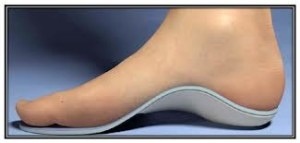
Check out Dr. Stephen Gangemi’s thoughts on orthotics!
Originally posted on http://naturalrunningcenter.com/2013/04/29/sock-docs-view-orthotics/
Sock Doc’s View on orthotics: Don’t leave home wearing them.
By. Dr. Stephen Gangemi
It’s been well over a year since I’ve discussed orthotics.
Orthotics, just like stretching, is an emotional and somewhat controversial topic because so many believe in their effectiveness for injury treatment and prevention. Others, such as myself, feel as though they either create, provoke, or hide a true problem. In an earlier article, “Are Orthotics Ever Really Necessary?” I discuss how orthotics are never truly fixing any problem. They support, rather than correct, dysfunction. They also dampen your senses as your feet are no longer allowed to move as unrestricted as they should. Your sense of body position (proprioception), and sensory feedback from your feet to your nervous system (kinesthetic sense), are dampened.
Yes, often they diminish and even eliminate pain, which is why so many claim they are successful. Perhaps you’ve had success with orthotics, or not; or maybe you are in the foot/footwear business and make hundreds or thousands of pairs of orthotics a year for your patients as some doctors who (unhappily) contact me have. Either way, I have decided to look through the eyes of these pro-orthotics people, and try to see what they see. Okay, it’s really just one Sock Doc eye; the other is certainly going to look away.
Argument Number One: Orthotics Relieve or Eliminate Pain
Pain is the number one reason someone is going to receive a pair of orthotics, most often from a podiatrist or chiropractor. Although most orthotic wearers suffer from foot pain (such as plantar fasciitis), others are using them for knee, hip, or even back pain. Do they help with pain? If they’re made correctly then yes – absolutely. There are many different types of orthotics as well as ways orthotics are made today so some of this success is going to be dependent on the skill and knowledge of the prescriber. Also, other therapies employed at the time the orthotics are prescribed often help with symptoms. Some prescribers, such as chiropractors, may adjust the bones of the ankle and foot before fitting the patient for an orthotic. This of course can also lead to greater success as the foot is in a more balanced and corrected state before support is rendered.
Though orthotics can be very effective in removing pain, (and I’m all for pain removal), this support-system method of treatment often is simply masking the symptoms and not addressing the problem. Say you have plantar fasciitis, for example. The fascia running along the bottom of your foot is too tight, torn, or even degenerated, and it’s causing pain. Your foot is not moving correctly and most often this is from a problem (weakness) in the tibialis posterior muscle. The main arch of the foot is not supported correctly, proper pronation and supination of the foot is not occurring, and the fascia is working too hard to stabilize the foot. The orthotic will often help stabilize the foot, but it will not correct the problem because it can not correct the weakness of the tibialis posterior. Just as if your wrist hurts because of a problem in the forearm, bracing your wrist is not going to correct your forearm. Masking the pain is not a correction, though this is often the answer in many types of medicine which looks for a quick and easy solution to a symptom. Orthotics for pain and dysfunction are like aspirin in your footwear.
Sure there are plenty of studies to say orthotics are “effective”. Unfortunately most of them are very short-term studies and they only look at one parameter for success – the removal of pain. They don’t ask or understand that although the [foot] pain may be reduced or eliminated, there is now pain in the knee, back, or perhaps shoulder from the new, different, and altered mechanics.
Let’s look at a few of the studies which support (haha) the use of orthotics.
1. Saxena & Haddad found that of 102 patients with patellofemoral pain syndrome, 76.5% improved and 2% were pain-free. 2% is not a huge success, and the 76.5% is left for interpretation as to what is “improved”. There were also other treatments used in this study and the age range was huge – 12 to 87 years old.
2. Shih et al found that a wedged insole was useful for preventing or reducing painful knee or foot symptoms in runners with a pronated foot. This study was only one 60-minute test and it’s unclear what a “pronated” foot is. After all, pronation is normal.
3. Gross et al report great success with orthotics in several symptoms, and this study is often cited by orthotic proponents. However, the study was a questionnaire given to 500 runners (262 responded). That’s not really a study, and as mentioned, it is only asking about the symptoms they were given the orthotic for.
4. Chang et al found that running injuries were related to training duration and use of orthotics. But just like above it was a questionnaire study of over 1000 runners (893 responded) and there is no indication between the training and orthotics.
5. Gross et al, (not the same as previous), found a 75% reduction in disability rating and a 66% reduction in pain with plantar fasciitis. There were only fifteen subjects, they looked at their 100 meter walk times (not very far) and the orthotics were only worn for 12-17 days.
Argument Number Two: Orthotics Improve Joint Mechanics
So do orthotics simply support dysfunction as I have stated previously or do they actually correct dysfunction? Well, that answer depends partly on what you interpret healthy joint mechanics to be. One study notes less strain in the foot with orthotics and a possible prevention for a stress injury to the second metatarsal (Meardon et al, 2009). The big what if here, though, is that the subjects couldn’t really say too much regarding what they were feeling since they were all dead. The eight cadaver specimens were mounted to a dynamic gait simulator to be analyzed.
Controlling “undesirable motion” is a term touted by orthotic advocates often. They say there is instability in a joint and it must be controlled, thus improving joint mechanics and reducing or eliminating pain. Sure instability isn’t a good thing in a joint, but how do you correct instability by stabilizing a joint with any device? You don’t. You stabilize a joint by correcting the faulty mechanics which are resulting in the unstable area. Actually, one of the best ways to train stability is with instability. This is why balance exercises are so good for stability.
You’re not going to improve stability very much standing on both legs on a flat surface, even if you are barefoot. I like to train stability while barefoot on a thin, uneven log — it’s so unstable; look out joint mechanics! So when a study says that orthotics may “enhance joint mechanoreceptors to detect perturbations” (Guskiewicz and Perrin, 1996), I say that they actually negatively alter these mechanoreceptors. Mechanoreceptors, by the way, are sensory receptors that respond to mechanical stimuli, such as pressure. You want as much healthy sensory stimuli getting to your brain as possible. This is what awakens and vitalizes your nervous system and is accomplished by interacting with your environment.
But there is a fine line between too much and not enough sensory stimulation as well as the source it comes from. So many people are in such sensory overload already from excessive lifestyle stresses that they can’t even walk barefoot because the added mechanoreceptor information and kinesthetic sense excite their nervous system too much, too fast. So they dampen this system with either conventional footwear or orthotics, and they feel better for it. But dampening the mechanoreceptor activity because of too much other external sensory “noise” is not the way to correct the problem. It’s not much different than calming your nervous system with alcohol at the end of a long, hard day. (Now I can get attacked by linking orthotic use to alcoholism.)
Speaking of movement, orthotics can have such negative effects too. Flexible arch supports have been shown to increase knee varus torque (Franz et al, 2008), and influence medial tibial stress syndrome (Hubbard et al, 2009). So it’s not always good, even when you’re in bad shape.
So yes, for those in a state of overall health distress, there may be improved joint mechanics as well as improved nervous system function with an orthotic compared to without. Even though I never use orthotics as I have other methods for treating such problems, I understand how they can so easily be the “go-to” treatment. If that’s the case, however, then function and health still needs to be addressed. These patients need to have their health and movement problems addressed and properly rehabilitated. They need to learn how to move well again, and not be dependent on their orthotics for so long, as often they are told to wear them for their entire life. The success of the orthotics will eventually run its course. So have a plan to wean out of those braces, (see my other article “Lose Your Shoes”), so you can move with strength, stability, and grace in any environment.
Studies Cited
Saxena and Haddad. The effect of foot orthoses on patellofemoral pain syndrome. J Am Podiatr Med Assoc. 2003 Jul-Aug;93(4):264-71.
Shih YF, Wen YK, Chen WY. Application of wedged foot orthosis effectively reduces pain in runners with pronated foot: a randomized clinical study. Clin Rehabil. 2011 Oct;25(10):913-23
Gross ML, Davlin LB, Evanski PM. Effectiveness of orthotic shoe inserts in the long-distance runner. Am J Sports Med. 1991 Jul-Aug;19(4):409-12.
Chang WL, Shih YF, Chen WY. Running injuries and associated factors in participants of ING Taipei Marathon. Phys Ther Sport. 2012 Aug;13(3):170-4.
Gross MT, Byers JM, Krafft JL, Lackey EJ, Melton KM. The impact of custom semirigid foot orthotics on pain and disability for individuals with plantar fasciitis. J Ortho Sp Phys Ther, 32:149-157, 2002.
Meardon SA, Edwards B, Ward E, Derrick TR.. Effects of custom and semi-custom foot orthotics on second metatarsal bone strain during dynamic gait simulation. Foot Ankle Int. 2009 Oct;30(10):998-1004.
Guskiewicz and Perrin. Effect of orthotics on postural sway following inversion ankle sprain. J Orthop Sports Phys Ther. 1996 May;23(5):326-31.
Franz JR, Dicharry J, Riley PO, Jackson K, Wilder RP, Kerrigan DC. The influence of arch supports on knee torques relevant to knee osteoarthritis. Med Sci Sports Exerc. 2008 May;40(5):913-7.
Hubbard TJ, Carpenter EM, Cordova ML. Contributing factors to medial tibial stress syndrome: a prospective investigation. Med Sci Sports Exerc. 2009 Mar;41(3):490-6.

Below are the thoughts of Jim Hixon manages the Feet for Life – Motion Center for Michael Horwitz, DPM.
Our goal is to make the Motion Center a leader in the effort to change the way we think about our feet and the connection they have with the movement of the rest of the body. We believe that by improving the strength, stability and flexibility of the feet, rather than developing a dependency on stable shoes and orthotics, it is possible to recover from current ailments and reduce or prevent future injuries. Healthy feet allow a person to move more naturally, and scientists agree that there is a direct correlation between movement patterns and the incidence of common ailments such as plantar fasciitis, Morton’s neuroma, shin splints, iliotibial band syndrome, patellar femoral pain, and lower back pain. Change can be made relatively easily and quickly by through a transition from traditional shoes to minimal shoes.
Here is his recent piece on natural running:
The development of all species is dependent upon the survival of the fittest, that is to say, individuals who possess the essential traits that enable them to adapt to their environment will be able to reproduce successfully and pass their genetic material on to future generations.
Locomotion is an essential trait for all animals, since the ability to move in order to obtain nourishment and avoid predators is necessary to insure the survival of individuals and, therefore, species.
As a species humans have developed physical characteristics that are resistant to dysfunction and injury, which allow them to stand, walk, run, and jump on two legs without external support.
Any restriction of the range of motion of the joints involved in locomotion leads to dysfunctional movements that decrease biomechanical efficiency and increase the chances of injury.
Any diminishment in the sensory information available to the body during movement prevents the body from being able to accurately discriminate changes in surfaces, which also leads to decreased biomechanical efficiency and increased risk of injury.
The sole of the foot is the direct contact between the body and the ground and this contact provides the body with essential information to move safely and efficiently.
In order to move without restriction and receive essential sensory information it is best for the body to be in its natural state, that is to say barefoot, as long as the sole of the foot can be protected from injuries caused by sharp or rough surfaces, and from extreme temperatures.
When the barefoot condition cannot be maintained, the type of shoe worn should fit the anatomy and function of the foot, that is to say, it should fit the shape of the foot and allow the foot to move with as little restriction as possible.
Traditional athletic, casual, and dress shoes have characteristics which negatively affect the position of the foot in relation to the ground and do not allow the foot to move with freedom of movement or receive the maximum amount of sensory information possible.
The structure of traditional shoe partially immobilizes the foot, which then becomes muscularly weak and imbalanced.
The thick sole of a traditional shoe also desensitizes the foot and prevents it from accurately detecting changes in surface hardness and texture.
Although orthotics can be useful for brief periods of convalescence from certain injuries, their continued use increases the dependency on external support caused by wearing traditional shoes.
Therefore, wearing traditional shoes, especially with orthotics, decreases efficient biomechanical patterns of movement and these dysfunctional patterns increase the likelihood of injuries.
To avoid the problems associated with wearing traditional shoes it is better to be barefoot or wear minimal shoes, although individuals with weakened and desensitized feet often need a period of transition.


Dr. Mark Cucuzzella joins The Nation to
- Recount his observations while he was running the 2013 Boston Marathon
- His response to a recent study on barefoot running
- How to “live more and die less”
- Upcoming clinics Dr. Mark will be leading in the U.S.
We referenced the following:
- Epigenetics: check out this video that describes it.
- Dr. Mark’s 8:26 minute video
Learn more from Dr. Cucuzzella at these web sites:
Closing Song: “Everlong – accoustic” by Foo Fighters
You can find us on iTunes or listen by using the player below. Click here to download the file (Right click, save as)

Username
Password

Leave a reply
Your email address will not be published. Required fields are marked *
Name *
Email *
Website
You may use these HTML tags and attributes: <a href="" title=""> <abbr title=""> <acronym title=""> <b> <blockquote cite=""> <cite> <code> <del datetime=""> <em> <i> <q cite=""> <strike> <strong>


-
 active 10 minutes ago
 -
 active 47 minutes ago
 -
 active 1 hour, 4 minutes ago
 -
 active 1 hour, 11 minutes ago
 -
 active 1 hour, 21 minutes ago
 -
 active 1 hour, 24 minutes ago






 Dr. Nick's Running Blog