

Article originally appeared at:
http://www.abc15.com/dpp/news/local_news/hear_me_out/hear-me-out-barefoot-running-vs-running-shoes-which-is-better
PHOENIX – Each Sunday, ABC15.com debuts an Arizona issue – along with two opposing sides on the topic.
Don’t worry, you always have the opportunity to make comments at the bottom of the page. Yeah, your opinion matters, too.
This weekend, we’re taking a look at the benefits of barefoot running versus wearing running shoes.
Jon Ford is a barefoot runner who believes the natural structure of our feet work well enough for running, and can be compromised by wearing shoes.
Cristin VanDreil of Sole Sports says shoes protect us in numerous ways, and their cushioning technologies help decrease impact placed on our bones and connective tissue.
We’re so used to the world today, as it is. We think it’s normal to wear shoes and abnormal to go barefoot. That’s really preposterous if you think about it. As an evolutionary biologist I can tell you: shoes are the fad, and barefoot running is the natural, normal state of running.” – Dr. Daniel Lieberman, Harvard University
I’m a barefoot runner. People have laughed at me, taunted me, yelled at me, cautioned me, questioned me, and generally just shaken their heads at me (particularly those who run faster than I do). In response, I do what any runner would, and what every barefoot runner must: take it all in stride.
At first I was incensed by myopic statements from podiatrists, a national shoe retailer and a major shoe manufacturer. Back then, I took solace in an online minimalist running group that shared my anger while discussing mutual experiences. But then two funny things happened: (1) major retailers and shoe makers joined everyone else on a quest to think about new footwear possibilities, and (2) our online minimalist group greatly expanded its thinking to subjects like running form, then anatomy, then diet, and then lifestyle. We began seeing the world with new eyes. More to the point, we began walking the world with new soles (and souls).
The best way to enjoy running is to treat it as a journey – through your world, your mind, your soul and this life. If wearing shoes is the best way for you to take that journey, so be it. But I’d wager a significant amount of money that the fastest way to learn a great deal more is by opening up to the bucketful of nerve-endings, exquisite design, and nearly perfect structure found in your feet – a stroke of brilliance that gets compromised (or at least masked) when you wear shoes.
The physical evidence has been mounting ever since we started asking new questions about stride, impact forces, and the efficacy of different shoe types. Google “barefoot running,” and a variety of sources will assault you. Use them to make your own judgment.
Better yet, consult local running experts. Sole Sports was among the very first to stock minimalist shoes, and it is many runners’ preferred source for good reason. Their stores are staffed by amazing runners – faster than me – who care about your journey because they are dedicated travelers themselves. You can trust them to earnestly help you.
The best thing to come out of the barefoot running controversy? We’re all talking about running, not just randomly picking shoes, tromping around, getting hurt and giving up. Today there are far more complementary (and sometimes conflicting) running techniques being taught than ever before, and multiple manufacturers offer a greatly expanded array of footwear options.
Bottom line, certain aspects of great running are relatively immutable while others will forever be relatively personal. The great thing about the barefoot running debate is that now we all have more options for our journey.
Jon Ford, Barefoot Runner
Do you agree with this opinion? Add a comment below to sound off.
Click “next page” to read the second position, ” Shoes, Are They All They Are Cracked Up To Be?”
Shoes, Are They All They Are Cracked Up To Be?
Some say to put them on, others say to take them off. What is a runner to do when every other person has a different “best recommendation”. Some of the biggest claims are “wear less of a shoe and prevent injuries”. None of us want to be injured but do the answers really lie in choosing a more minimal shoe?
Shoes protect us in numerous ways. Their cushioning technologies help decrease impact placed on our bones and connective tissue, the outsoles protect us from stepping on something that could penetrate our foot, and the upper structure keeps our foot held in protection. Protection is good. When we run it has been shown that we impact at three times our body weight. Without gradual and progressive training, our connective tissue and bones can not adjust. As a result we get injured.
So what does a standard training shoe give a runner that a “minimal” shoe does not. It gives protection. Standard training shoes vary from a 8mm drop to a 12mm drop (difference between heel and forefoot height). Standard running shoes come with many different amounts of stability that fit a variety of foot shapes. Your minimal shoe choices have less stability due to their purpose in helping the runner adopt a more natural stride; leaning slightly from the ankle, increased cadence around 180 bpm, and landing and leaving with a midfoot striking pattern.
When heel striking, impact happens in front of your center of gravity, creating a deceleration of impact. This in turn can create risk for injuries. So while a traditional shoe can provide protection, a more minimal shoe with a 0-4 mm drop can help create better running mechanics. However, I tell everyone that this type of shoe should be a tool in your running arsonal and used with caution. We are not conditioned to run this way due to being in traditional shoes most of our lives. We are not used to the drop of the heel and the extra stretch placed on the achilles and calf. I recommend using the shoe to walk around for the first week of use. During the second week go for a short five minute easy run. If no pain after use; continue using the shoe every other day and increasing the time 3-5 minutes on each use. It is much better to play it safe than end up sitting at home injured.
In addition to shoe choice, it is important to concentrate on better running mechanics. Staying relaxed and think of the following:
Look ahead
Land softly with your midfoot
Keep roughly a 90 degree bend in elbows letting arms swing forward and backward approximately 23 degrees
Relax your shoulders and keep hands loose
Limit vertical oscillation (vertical bounce) which wastes energy
Run at approximately 180-185 strides/minute
Sole Sports carries a large inventory of both traditional and minimal shoe choices. Each customer is watched on the treadmill to help determine their unique striking pattern which helps in determining the proper shoe choice. Past injuries, foot structure, training volume all help in determining what is best for each individual customer.
Cristin VanDreil, Sole Sports
Do you agree with this opinion? Add a comment below to sound off.
Taken from The Science of Running By Steve Magness. Available at www.ScienceofRunning.com.
In the research literature there has been a trend towards the recommendation of high intensity versus high volume training (Berg, 2003). This is likely a result of the short term nature of research studies. Given the changes that occur with high intensity versus lower intensity and longer duration training, it is not surprising that high intensity training shows greater benefits over only a couple of weeks. This has led to the conclusion that high intensity training is preferential over higher volume to reach the same adaptations. However, it is questionable whether this preference has merit. Seiler and Tønnessen found that elite endurance training consists of about 85% of the training being performed at low to moderate intensities in several different groups of elite endurance athletes (2009). Furthermore, they point out that elite training is more likely to represent optimum training than what is demonstrated in the lab setting because of a likely evolution process of training by elites.
Contrasting the research theory, Esteve-Lanao et al. demonstrated that it was the amount of easy running that impacted running performance over a 10km race, not the amount of high intensity training (2007). The experience of elite endurance athletes also contradicts the research findings that high intensity, low volume training is optimal. As pointed out already it seems that the best runners combine a higher volume of training with some higher intensity training. Due to the high volume of training, the large percentage is low intensity, but the absolute volume of relatively high intensity training still reaches levels of 20mi or more per week (Billat et al., 2003). In a paper by Laursen, he points out two key findings, first, without a background of high volume training, high intensity training can maintain performance, but seldom improve performance (2009).
Secondly, while the adaptations of high intensity and high volume training may be similar, they may occur via two different pathways. Most of the training studies manipulating intensity of training add high intensity work to athlete’s training schedule that have been doing a large volumeof low intensity training. This interaction that high intensity training must be preceded by high volume training is fundamental in popular literature on distance running, but neglected in the research.
Addressing the first point made by Laursen, high intensity training is more beneficial when preceded by what is termed a base in popular literature. In a study by Quinn et al., two different groups performed either continuous exercise or interval training for 12 weeks (2002). At the end of the 12 weeks, the groups switched, so that the continuous group now did 12 weeks of interval training. It was found that the group that did continuous and then interval training improved significantly more in terms of time to exhaustion (15% to 5.3%) and VO2max (7.4% to 3.6%) than the group that did interval and then continuous training. These finding supports the idea that a base of moderate work needs to be established before intense training is done for maximum benefits. This could also explain why in most studies which simply replace a portion of the low to moderate training in their subjects with high intensity training, performance is improved by so much. This interaction of prior training’s impact on training during a study should be taken into consideration when evaluating study results.
According to Laursen, high volume training may signal for adaptations through the calcium-calmodulin pathway, because of the increase in intramuscular Calcium seen in long duration, high volume training (2004) In contrast to this, high intensity training may signal adaptations through the adenosine monophosphate kinase (AMPK) pathway because of the increase in AMP seen following high intensity training. Both of these pathways eventually lead to PGC-1α, which is a transcriptional cofactor that will result in the typical adaptations seen in endurance athletes such as mitochondria biogenesis (Laursen, 2004). Laursen thus concludes that there are two very different ways to achieve similar adaptations. This points to the idea that to maximize these adaptations both stimulus are likely needed, as one pathway may be more difficult to activate than the other depending on the individual and their training status.
In conclusion, it is likely the time course of changes and the length of the research studies which is creating this discrepancy between real world recommendations and findings and the findings in the lab. High intensity training is likely to show quick adaptations, explaining its greater impact on performance within a short period of time. The long term effect of repeated high intensity training is not something that has been researched in the literature. The experience of coaches points to a long block of high intensity training leading to decreased performance, mostly likely due to overtraining (Lydiard, 1998). Lastly, some research points to the idea that high intensity training may need to be preceded by higher volume training to see maximal benefits. This possibility needs to be further researched and considered when evaluating training research.
Below is an article that I wrote for Vibram USA’s education program over a year ago demonstrating the changes and benefits we are seeing from wearing minimalist shoes. Since then I have seen even more benefits from runners and patients in my office that have transitioned to running in a minimalist shoe. We are looking for more interesting stories!! If you or someone you know has transitioned to minimalist shoes,or even barefoot running, please share with us! Email to:
feet@me.com
Feel free to send pictures as well!!
Thanks,
Dr. Nick
Anecdotal Evidence and Minimalist Shoe Gear
With the magnitude of interest that minimalist running shoes are getting, critics continue to speculate that there is a rise in injury directly related to the shoe. While evidence based medicine has yet to prove a decrease in injury from minimalist shoes (nor is there evidence based medicine for a decrease in injury from traditional running shoes / orthotics) we are seeing a large number of patients with a decrease in their symptoms by transitioning properly to this type of shoe. It is not possible to share every case, however it is fascinating to see the changes that are occurring by simply changing to a minimalist shoe.
RADIOGRAPHIC EVIDENCE OF CHANGE IN GREAT TOE POSITION AFTER RUNNING IN FIVEFINGERS FOR 8 MONTHS.
These are the radiographs that were taken of a patient before and after the transition process to running in a minimalist shoe. Specifically the patient was wearing FiveFingers (TrekSport.) The radiographs were both taken in a weightbearing position. When the two seperate views are overlapped the joint spaces and key anatomic landmarks line up demonstrating that the xays were shot with the foot in a very similar position. You can clearly see the large increas in space between the great toe and 2nd toe as demonstrated by the red arrows (see the soft tissue outline from the skin.)

BELOW IS A POST THAT WAS SENT TO ME REGARDING ARCH DEVELOPMENT FROM WEARING FIVEFINGERS
Let me start this post by saying that this is not a sponsored post. I bought these myself and wanted to share some hard, objective data with you to potentially help you with your own weight loss/fitness journey!
A few months ago when I reignited my fitness journey, one of the first conscious decisions I made was to take a risk and try something different. I have very flat feet and have been wearing orthotics for the past decade… ever since I stopped my intense training in the martial arts. With my arches so flat, I always felt at the end of the day like I had been walking around Disneyland for the past 13 hours; even if I hadn’t walked that much. So, I sought out a podiatrist and began looking into picking up some prescription orthotics. Eventually, I picked up a pair and it was heavenly! Though it was pretty harsh walking on plastic footbeds (with padding on them), my feet weren’t sore like they were before. That is how I was fixing the problem of dealing with my flat footedness. Conventional wisdom. Conventional medicine. Like I said though, this time around I was going to try something new.
Minimalist Shoes and the Hype
Back to present day: When I decided that it was time to do better, it wasn’t a whim that lead me to the notion of going with barefoot running and minimalist running shoes. I’d heard about VFF’s, as they’re called by the minimalist faithful, roughly two years earlier and had been following the research and headlines off and on since then. They looked pretty cool (I have a thing for camo) and at the time I first found them I was looking for water shoes not knowing that Vibrams were so much more than that. So, the day I decided I was getting back into shape I immediately ran out to REI and picked up a pair of Vibram Five Fingers’ TrekSports. It was love at first run! My calves were sore but I could feel them getting stronger and as an added bonus, I could actually see them getting stronger. There was just one nagging concern in the back of my head… hype. One of the claims of the barefoot and minimalist running evangelists is that running shoes actually weaken arches and the supporting muscles in your feet and by running the way that nature intended, you will actually strengthen those atrophied muscles. A large part of my decision to go the minimalist route was various posts I’d read by large guys like myself who were now running without shin splits or knee or hip pain, thanks to Vibrams. I was 250lbs and figured that if other 250 or 300lb guys were seeing results then it was probably not too far fetched that I could as well.
Vibram Five Fingers and the Foot Scanner
Being the nerd I am, anecdotal evidence wasn’t enough for me. I decided that around the 3 or 4 month mark I would have my feet rescanned to see if my new running posture (I’ve been using the Pose method), which I attribute to the wearing of the VFFs, had yet effected the muscles in my feet for the better. That meant that I should also see an improvement in my arches. During this time I also wore my VFFs at work, for short walks around the neighborhood and to work out in. In other words, I practically lived in them. They’re so comfortable that I wanted to wear them all the time! The only time I didn’t wear them was when summer got into full swing and I started wearing flip flops. This week, I went and had my feet rescanned, the results of that scan are below, along with my baseline scan which shows how my feet looked prior to wearing VFFs.

The scan above is my baseline scan. This is what my feet looked like after having worn prescription orthotics. I wish I had scans from before I began wearing the orthotics, but I don’t. The right side of the page shows what healthy feet should look like and the left are mine.The dark areas of my foot are where the most pressure is being placed on the contact surface. Notice how different the arch on my right foot looks than the left? My right arch is pretty collapsed, which means the left side of my body is doing more work. This can lead to lower back pain (and it has), very tight thigh muscles (IT band issues) and sore, tired feet. I’ve experienced all of the above.
This scan shows my feet today. Notice how balanced my arches are now? That’s because my right foot actually has an arch now! I thought it was a pretty dramatic difference myself. I could’ve had the doc send my scans to the lab to have them pour over them with precision and give me hard data for the improvements in my arch, but I figured I’d save the doc and myself the expense since the pictures are fairly striking. I can tell you that I’ve been running now for four months, averaging 3-5 miles a week, and have had no shin splits, no lower back pain and no running associated knee pain (they’ve been a little tender but that’s because I’ve also been doing a lot of squats).

So, there you have it! Let me make one thing clear though. I’m always asked by people, “how do you like your Five Fingers?” I tell them that I love them and how much better I “feel” having worn them but I’m also careful to let them know that the shoes themselves aren’t a “magic bullet.” Vibram Five Fingers didn’t do this to my feet, running with no cushion, on the balls of my feet like a sprinter did this to my feet. Walking around in them all the time, did this to my feet. Not pushing myself too hard and injuring my feet (people are seeing instances of plantar fascitis and top of foot injuries from overuse) did this. The shoes, as awesome as they are, were the catalyst for all of this though. If I hadn’t stumbled upon the site while looking for water shoes years ago, I may not have stumbled upon the barefoot and minimalist running movement and added one of the most important tools in my fitness journey to my toolbox.
HERE IS A LETTER I RECEIVED FROM A PATIENT THAT HAD SUFFERED FROM KNEE PAIN FOR SEVERAL YEARS. THIS IS HER RESPONSE AFTER WEARING A MINIMALIST SHOE WITH A ZERO DROP FOR 6 WEEKS.
I have learned when it comes to my feet and knees less is more…. more comfortable. I was having pain in my knees and I tried every type of athletic shoe and orthotic known to man. I thought the fancier the shoe and the more equipment the better I would feel. Not true. Dr. Campitelli pointed out that I was comfortable when I was home walking in my bare feet so why not try a minimum shoe. Within days I could see a difference. The pain seemed to recede and I was able to exercise and have much more mobility. I didn’t need the heavy athletic shoes, the rocker shoes or all those orthotics. Just needed a simple lightweight pair of minimum flexible shoes.
-Laura
While we are years away from establishing evidence based research that minimalist shoes are beneficial ( I am currently involved in several studies), we are definately seeing a lot of anectodal cases in our practice as well as from runners and patients contacting me via email.
Please feel free to send me your story with pictures!
-Dr. Campitelli

Wednesday, September 5, 2012
Barefoot runner visits Eagle on Saturday
by
Derek Franz
dfranz@eaglevalleyenterprise.com
Rae Heim, 18, has been running barefoot across the country since April 1, when she started in Boston.
Today she enters Eagle County by those same bare feet. She’ll be passing through from now until Tuesday as she continues her journey to California and will be at the Dusty Boot restaurant in Eagle Ranch from 6:30 to 7:30 p.m. Saturday.
She is raising money and awareness for Soles4Souls, an organization that provides shoes for needy children and adults.
Heim will stay with Eagle resident Mick Daly while she is here.
“This will probably be the longest number of nights she has stayed in the same bed during this trip,” said Daly, who is a longtime runner and will accompany Heim on some legs of her journey in addition to driving her to and from her start/end points in Eagle County.
On Heim’s Facebook page she says that she never ran more than a mile until she was 15. She has since fallen in love with “a former enemy” and finished five half marathons and two full marathons — the last three she ran fully barefoot.
“When she started, she thought the trip would only take four months, which wasn’t realistic,” Daly said. “She’s had to improvise and she has been running long stretches by herself. Utah was a concern, since there are such long, empty stretches of desert there. It’s basically wilderness. Someone recently committed to taking a month off work to follow her with his RV so she can have support and a home base.”
People are encouraged to bring their children and teenagers to hear Heim speak at the Dusty Boot on Saturday. They are also encouraged to wear or bring gently used shoes to be left as a donation to Souls4Souls.
For more information, contact Daly by emailing mick@daly.com or by calling (970) 948-5950. Heim’s website is RunRaeRun.org.

By DR. DALE BUCHBERGER
Originally appeared at
http://auburnpub.com/columnists/dale_buchberger/the-good-and-bad-of-barefoot-running-and-minimalist-footwear/article_8ff74449-988d-5345-8eb0-d8c80e563a93.html
The topic of barefoot running is one that will draw mixed opinions not only from health care professionals, but also track and field coaches. This is not the first time the concept of barefoot running has been brought to our attention. This seems to happen nearly once a decade. When Abebe Bikila won the 1960 Olympic marathon in bare feet, the concept was prominent. In the ’70s, “earth shoes” came out. In the 80s it was South African barefoot runner Zola Budd. Recently, you may have seen some people wearing odd-looking footwear with “toes” instead of the closed toe box of conventional footwear. These are also known as “minimalist” shoes. This has given the barefoot craze some momentum. For starters, they are more comfortable and appealing than their hideous-looking predecessors, the earth shoes. So the question remains: Is barefoot running good or bad?
The idea of barefoot running has been studied for many years, but much of the mainstream popularity was created by the bestseller “Born to Run” by Christopher McDougall. After living with and observing a tribe of well-trained humans in Mexico, McDougall proposed that everyone should be running barefoot because this improves your gait cycle and promotes a more efficient gait. When looking at McDougall’s ideas, they are not so much about shoes as they are about learning to run efficiently. It just so happened that running barefoot was a shortcut to learning how to run efficiently. Next question: Why does barefoot running create efficiency?
Barefoot running forces the individual to land on their mid and forefoot rather then on their heel and rear foot (as most traditional running shoes now promote). Running with a “heel strike” increases forces through the lower extremities and into the spine. Landing on the forefoot, or a “barefoot strike,” reduces the forces through the lower extremity and spine at impact. This creates a smoother transition to the next cycle, as the other leg comes through and prepares to hit the ground. Therefore, instead of pounding the ground and springing forward, the individual glides over the terrain.
The beginning of the running craze of the ‘70s that started with the “rock star” approach of Steve Prefontaine; the gold medal performance of Frank Shorter and publishing of “Running” by Jim Fix also began with minimalist shoes. Only, we didn’t call them minimalist shoes because they are all we had! Nike’s original models such as the Oregon Waffle and the Waffle Trainer did what they were supposed to do: Keep you from cutting your foot on man-made surfaces, and provide a shield from the elements. Once shoes became “corrective devices,” all heck broke loose, creating a magnification of running injuries and the idea that running was “bad for you.” In reality, running is not bad, but rather running bad is bad. Our old minimalist shoes forced us to run correctly or not run at all. The new breed of athletic shoes has allowed an entire generation of inefficient runners to hit the streets and literally pound the pavement.
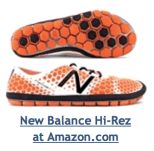
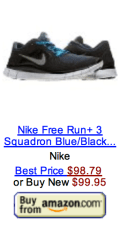
The most popular minimalist shoes are the Vibram Five Fingers, New Balance Minimalist and the Nike Free Run. The idea goes back to Nike’s original designs: Provide protection to the foot, but allow you to run with barefoot mechanics. They are lightweight and flexible, and have a wide toe box (front of the shoe) and what is known as a zero-drop sole. This means the heel of the shoe is the same thickness of the rest of the sole. This is contrary to conventional running shoes that are built with a dramatic heel lift. It is actually the heel lift of modern-day shoes that creates a good portion of running-related injuries by creating imbalances of strength, weakness and stiffness in the lower extremities.
If you want to try minimalist shoes, there are a few simple rules to follow. First, be realistic with your expectations. Minimalist shoes will not fix your injuries and you will most likely go through a period of soreness in the legs and back. Do not expect to train at your normal volume or intensity for several weeks to months. Make sure that you are injury-free. Start by wearing your new shoes for daily activities and progress to running. Make sure you are regularly stretching your calves and plantar fascia (bottom of the foot).
Like it or not, age is a large determiner in being able to wear minimalist shoes. The older you are, the longer it takes to adapt to the minimalist approach. You may have also developed certain maladies that will prevent the use of these shoes. If you have any questions, start by asking your health professional or try this online resource:
You may have seen clinics popping up around the U.S. in speciality running stores offering an evening workshop with something known as “Good Form Running.” What exactly is this? It is probably the most important thing a runner can do and most of the times is free. Good Form Running was started by Curt Munson and John Benedict, co-owners of Playmakers: a specialty running store in Okemos, Michigan. With over 60 years combined experience in the running industry, John and Curt used their knowledge to develop the Good Form Running clinic. It is based on the idea that running is a skill to be learned. With simplicity as its goal, GFR focuses on teaching proper mechanics that will help prevent injury and increase your efficiency as a runner. The clinic is now sponsored by New Balance, traveling across the country into other specialty running stores.
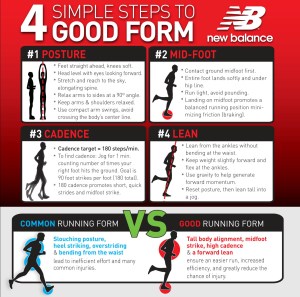
What is so significant about the form that is being taught? Nothing other then it is how we all should be running. Basically it is designed to simply “reset” our bodies and let them run the way they were designed – efficiently. John and Curt gathered with their team and looked at all of the most common traits that elite runners ran with. They broke it down bit by bit until it was very easily seen and could be taught in 4 simple steps:
1. Posture
2. Midfoot strike
3. Cadence
4. Forward lean
Understanding each step is simple and can be learned very quickly. It is best learned barefoot and on a surface that is flat and free of debris. While it can be practiced on a treadmill it is much easier learned a surface as a treadmill can sometimes psychologically alter the gait.
Good form running can be learned quickly but the transition process can take time as your body will be adapting and utilizing muscles in a new manner. Typically with a transition phase, we advise implementing about 10% of a new activity to what you are currently doing. With form changing, one can typically do more then this as it is not as radical of a change. I would advise focusing on trying to maintain this form throughout your entire run. Purchasing a running metronome (click here to purchase from Amazon) or downloading a cadence MP3 (download here) for your iPod can greatly assist in the process. Your speed may significantly decrease at first while trying this, but eventually you will develop a natural stride and your speed will increase most likely to faster then that of which you were running previously as you will be more efficient.
Too often runners look toward shoe-gear to fix an injury. As I tell many of my patients when they ask me what shoe they should wear to start running – “Learn how to run, then figure out what shoe to wear.”
To learn more about Good Form Running visit www.goodformrunning.com.

If we should putting “cushion” under our heels, why aren’t more shoes looking like this?? Just thought I would share this 1987 Air Max picture with everyone. Running with this most likely didn’t fix any foot, leg or knee issues. The real question is did it create knee pain, foot pain, or back pain??
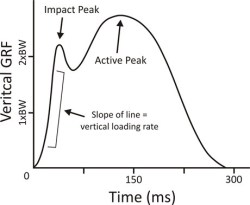

Read Pete Larsons review of the article at:
http://www.runblogger.com/2012/08/study-impact-loading-rate-in-running.htmlEur J Appl Physiol.
Impact reduction during running: efficiency of simple acute interventions in recreational runners.
Source
University of Lyon, 42023, Saint-Etienne, France.
Abstract
Running-related stress fractures have been associated with the overall impact intensity, which has recently been described through the loading rate (LR). Our purpose was to evaluate the effects of four acute interventions with specific focus on LR: wearing racing shoes (RACE), increasing step frequency by 10 % (FREQ), adopting a midfoot strike pattern (MIDFOOT) and combining these three interventions (COMBI). Nine rearfoot-strike subjects performed five 5-min trials during which running kinetics, kinematics and spring-mass behavior were measured for ten consecutive steps on an instrumented treadmill. Electromyographic activity of gastrocnemius lateralis, tibialis anterior, biceps femoris and vastus lateralis muscles was quantified over different phases of the stride cycle. LR was significantly and similarly reduced in MIDFOOT (37.4 ± 7.20 BW s(-1), -56.9 ± 50.0 %) and COMBI (36.8 ± 7.15 BW s(-1), -55.6 ± 29.2 %) conditions compared to NORM (56.3 ± 11.5 BW s(-1), both P < 0.001). RACE (51.1 ± 9.81 BW s(-1)) and FREQ (52.7 ± 11.0 BW s(-1)) conditions had no significant effects on LR. Running with a midfoot strike pattern resulted in a significant increase in gastrocnemius lateralis pre-activation (208 ± 97.4 %, P < 0.05) and in a significant decrease in tibialis anterior EMG activity (56.2 ± 15.5 %, P < 0.05) averaged over the entire stride cycle. The acute attenuation of foot-ground impact seems to be mostly related to the use of a midfoot strike pattern and to a higher pre-activation of the gastrocnemius lateralis. Further studies are needed to test these results in prolonged running exercises and in the long term.
by Nicholas A Campitelli DPM FACFAS

Originally appeared in Podiatry Today.
http://www.podiatrytoday.com/blogged/questioning-our-reliance-motion-control-running-shoes
I recently lectured at the Andrews Institute for Orthopaedic and Sports Medicine on New Paradigms in Endurance Sport. It was an honor to be in the presence of one of the greatest educators on running, Mark Cucuzzella, MD, a nationally known lecturer and instructor on running form as well as a two-time winner of the Air Force Marathon.
We lectured to 50 participants who ranged from physicians and physical therapists to coaches and personal trainers. The course focused on proper running form, nutrition and running injuries. Dr. Cucuzzella began the course discussing training patterns that help our bodies adapt to the demands placed upon them without becoming injured. We reviewed the well-known Lydiard training principles that have enabled runners to break the four-minute mile and allowed others to continue a fast pace during marathon.
The most fascinating aspect of the conference was how little time we spent discussing shoegear. Dr. Cucuzzella, who owns the Two Rivers Treads shoe store in Shepardstown, WV, and has helped start 10 Natural Running Stores, led a review of the evolution of running shoes through the past 40 years. We demonstrated how shoes have a cushioned heel and rigid support throughout the rearfoot and midfoot despite a lack of any evidence-based research showing this reduced injury or even helped runners become faster.
Dr. Cucuzzella used this information to lead the discussion into the next segment on running form in which he demonstrated the importance of proper mechanics over the need to wear shoes. The runners initially learn this form barefoot to ensure that a shoe will not hinder their ability to feel the ground and disrupt the proprioceptive feedback that is crucial to developing proper running form.
The feedback from the participants was outstanding. There were many who showed up in their traditional running shoes. They received information from course directors on how to run with minimalist shoes and there was an increased understanding that having the proper running form greatly outweighs any combination of shoes and orthotics to prevent or reduce injury.
A Closer Look At The History Of Elite Runners
The course also featured an extensive review of running training patterns over the last 60 to 70 years. It is very eye opening when you look at the history of long distance and endurance runners, and see how they were training and what was on their feet. Reviewing the history of what some of the fastest runners have worn as their shoes throughout the years helps us to realize what little, if any, importance that shoes have on running.
On May 6, 1954, Roger Bannister became the first person to break the four-minute mile. He was obviously not wearing motion control running shoes because they didn’t exist back then. Later that same year, Australia’s John Landy again broke the four-minute mark and New Zealand’s Peter Snell broke that mark in 1962. Again, they wore no high-tech cushioned shoe.
Today, Hicham El Guerrouj of Morocco holds the record for the mile at 3:43. Of course, he was wearing minimalist shoes known as racing flats.
The naysayers of minimalist shoes and barefoot running use the argument that today’s elite athletes may be racing in a flat or minimalist shoe but they are doing their training runs in motion control or cushioned shoes. Bannister and Snell were following the Lydiard method of training, which had them running up to 100 miles a week and sometimes even more. What were they wearing? They wore leather shoes that had no support, cushion or heel. In other words, they were minimalist shoes.
Regardless of what today’s record holders or those trying to break those records are training in, they appear to be performing best in minimalist shoes or racing flats. Even the elite marathoners are racing in minimalist shoes or racing flats. Meb Keflezighi, an Olympic silver medalist, wears the GOrun minimalist shoe (Skechers).
What Positives Do Motion Control Shoes Provide?
What is the benefit of training in a motion control shoe? Injury prevention obviously is the number one response from most individuals. This answer does nothing more than open the floodgates for more questions. Why did the runners from the 1950s and 1960s not get injured putting in 100 miles a week in a non-supportive shoe? They trained in the same or similar shoe that they raced in.
What explains the injuries such as plantar fasciitis that we are seeing in today’s runners who are wearing cushioned supportive shoes with heels? Olympic marathoner Ryan Hall admitted to having plantar fasciitis while training for the Olympic Games in London this past May. He races in a flat shoe but trains in cushioned supportive shoes that are indeed motion control shoes, although Asics will not refer to them as having “motion control.” For all intents and purposes, they are traditional running shoes.
The point of the matter is that runners should be focused on “how to run” and not what shoe they are wearing.
Will a shoe make the runner faster? Most likely this would happen only as a result of minimizing the friction that occurs between the skin and the ground. However, in my opinion, the shoe only needs to consist of a relatively thin rubber sole with no support or cushion, and definitely not a heel.
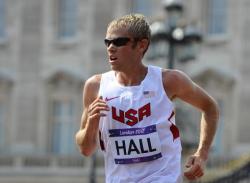
After waiting months to see Ryan Hall compete in the Olympic Marathon, it was heartbreaking to see him walk off after running 10 miles. Months, or you could also say years, of training were sacrificed for this one event, only to have it come to an end by an injury. Marathon training does take years to “build the engine” to get you to peak performance levels, but it most likely wasn’t this one event that lead to his injury. Hall had been dealing with plantar fasciitis according to the media for months. There are even photos of him standing next to MRI images of his foot ruling out any underlying stress fractures most likely as he continued to run.

Hall next to foot MRI images.
The question that I have is what caused his plantar fasciitis. This is an epidemic seen amongst our country most likely due to our unnatural shoe gear that is dictated by our society. Why would such an elite athlete develop something like this? His reason for dropping was not foot pain, but hamstring pain and tightness which would lead one to suspect there were gait changes along the way as he was dealing with the fasciitis causing his hamstrings to become overused. As many have heard, Ryan had abandoned his coach to use a more unorthodox training method described as “faith based training” where he listened to God’s word to help his training regimen. One specific training technique that Hall implemented was done in an attempt to see if he could break 2:00 hours in the marathon, a feat that has never been done. This requires maintaining a pace of a 4:40 mile. Ryan admitted to having a training partner get on a bike and ride at a 4:40 pace and he would follow for as long as he could. This became an unsuccessful attempt although he still believed the feat to be possible. Would this have been his “overuse” that led to the development of the plantar fasciitis? Or, and I hate to say this, but could it be is traditional cushioned heel running shoes that he wore for training runs? I had discussions with Asics representatives (Hall’s number one sponsor) prior to the Olympics as to what shoes he was running in and what he will wear for the Olympics. They showed me the sample shoes that they had which were size nine’s for Ryan of course, and admitted that he runs in a variety of models that Asics has and that “he could pretty much wear any shoe he wanted to with his gait.” While racing, Hall wears the Asics Gel-HyperSpeeds which are a racing flat very much like a minimalist running shoe.

Asics Gel HyperSpeed
Despite the large incidence of plantar fasciitis seen in our society, I truly believe it is an epidemic that should not exist. Over the past 60 years it has been described as many different diagnosis ranging from heel spurs, plantar fasciosis, plantar fasciitis, to in more severe cases- calcaneal stress fractures (heel bone.) We have since demonstrated that heel spurs that arise on the calcaneous bone have no direct correlation to heel pain, and symptoms resolve in these patients without surgically removing the spur. Studies have even demonstrated the non existence of inflammatory cells in the plantar fascia that was surgical released for treatment purposes in those suffering from heel pain. Treatment regimens that exist utilizing custom orthotics, motion control running shoes, and stretching exercises combined with injections and NSAIDS, do not always prove successful. Routinely these patients present to my practice with bags of shoes and inserts who have been suffering for years asking for help.
So why do so many people suffer from this chronic heel pain? A new theory exists that most likely will become more prevalent as we see more people transition out of motion control shoes. There are two important muscles in the foot that originate on the heel bone in the exact same position as the plantar fascia. The abductor hallucis (ABH) and abductor digiti minimi (ADM) muscles. The ABH muscle is the main supporting muscle of the arch. If this muscle is not fully functional or utilized as a result of wearing motion control shoes, then it becomes very weak and very prone to overuse. It is this reason that we see so many people who immediately begin wearing flip flops in the summer months develop heel pain. Their foot is used to being in a more supportive shoe during the off seasons, and when they place on their flip flops for 8 hours of wear, the muscles haven’t had a chance to adapt. Especially the ABH. The muscle then develops an overuse syndrome much like that of a tennis elbow which causes a tendonitis like reaction. We see the classic pain and stiffness associated with movement of the foot after arising in the morning of after periods of rest, which is followed by relief only then to have the pain return later after being weight-bearing for a period of time. These are the exact same symptoms that plagues someone with a typical tendonitis anywhere else on the body.
Could Ryan Hall’s plantar fasciitis been the culprit of a traditional running shoe? I don’t think it is right to directly blame the shoe, however, our foot does not function the way it was intended to when we place a large cushioned heeled shoe under it.




 Dr. Nick's Running Blog